
Blog 24 – The Blue Green Wars: Times India-Pakistan batted for victory

India and Pakistan’s cricket rivalry is one of the most intense and high-profile in the world of cricket. Their matches are often watched by millions of fans around the world, and the players are under immense pressure to perform.

India and Pakistan first played against each other in 1952, just a few years after Pakistan gained independence from British India. Since then, they have played a total of 199 matches across all formats of the game, with India winning 131 and Pakistan winning 73. There have been 5 tied matches and no result matches.

The two teams have played 59 Test matches against each other, with India winning 9 and Pakistan winning 12. There have been 38 draws in their Test matches. The first-ever Test match between the two teams was played in Delhi in 1952, which ended in a draw. The most recent Test match between the two teams was played in Rawalpindi in 2021, which India won by an innings and 46 runs.

In One Day Internationals, India and Pakistan have faced each other 131 times, with India winning 61 and Pakistan winning 75. There have been 4 tied matches and 1 no result match. India and Pakistan have played some iconic ODI matches over the years, including the 1992 World Cup match in Sydney, where Pakistan chased down a target of 217 with only one wicket remaining, and the 1996 World Cup quarter-final in Bangalore, where India won by 39 runs.

In Twenty20 Internationals, India and Pakistan have faced each other 13 times, with Pakistan winning 6 and India winning 7. There have been no tied matches or no result matches. One of the most memorable T20I matches between the two teams was the final of the 2007 World T20 in Johannesburg, which India won by 5 runs.

India and Pakistan have also played against each other in other international tournaments, including the Asia Cup, the ICC Champions Trophy, and the World Cup. Some of the most memorable matches between the two teams in these tournaments include the 1999 Test series in India, where Anil Kumble took all 10 wickets in an innings in the second Test, the 2003 World Cup match in Centurion, where Sachin Tendulkar scored a brilliant century, and the 2011 World Cup semi-final in Mohali, where Tendulkar once again led the batting charge for India.

Overall, India and Pakistan’s cricketing rivalry is characterized by intense competition, high stakes, and a long history of memorable matches. While India has a better overall record against Pakistan in both Test matches and ODIs, Pakistan has had the upper hand in T20Is.

Some notable matches between India and Pakistan include:

1971 Test Series: India won the series 2-1, with the third Test famously known as the “Greatest Test Match” due to the close finish and the performance of Indian cricketer Sunil Gavaskar.

1996 World Cup Quarter-Final: India won the match by 39 runs, with Navjot Singh Sidhu and Ajay Jadeja leading the batting charge for India.

1999 Test Series: India won the series 2-1, with Anil Kumble’s 10-wicket haul in the second Test being a standout performance.

2003 World Cup Pool Match: India won the match by 6 wickets, with Sachin Tendulkar scoring a brilliant century.

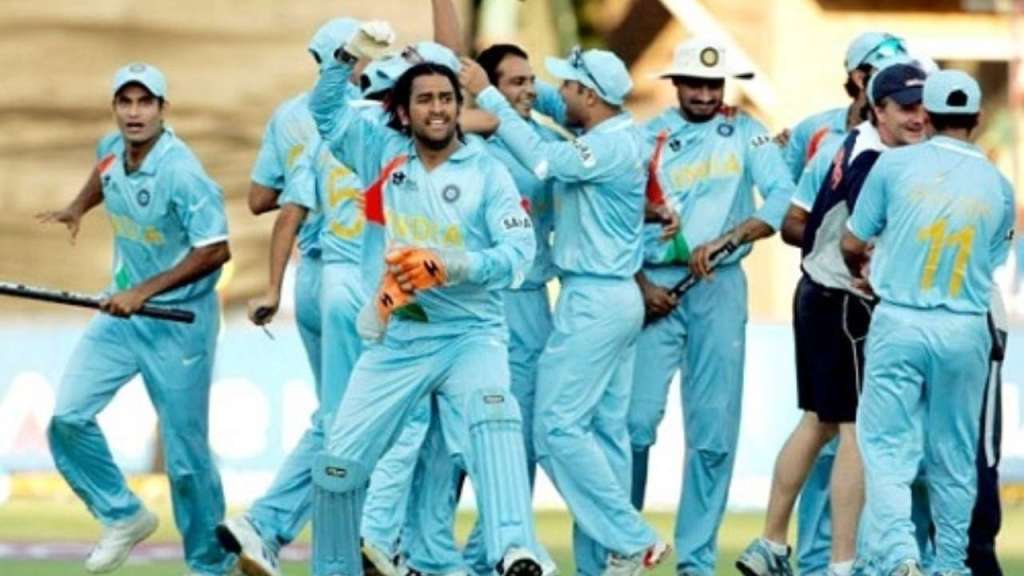
2007 T20 World Cup Final: India won the match by 5 runs, with Dhoni showing his amazing captaincy acumen by calling the rookie Joginder Sharma to bowl the final over of the match!
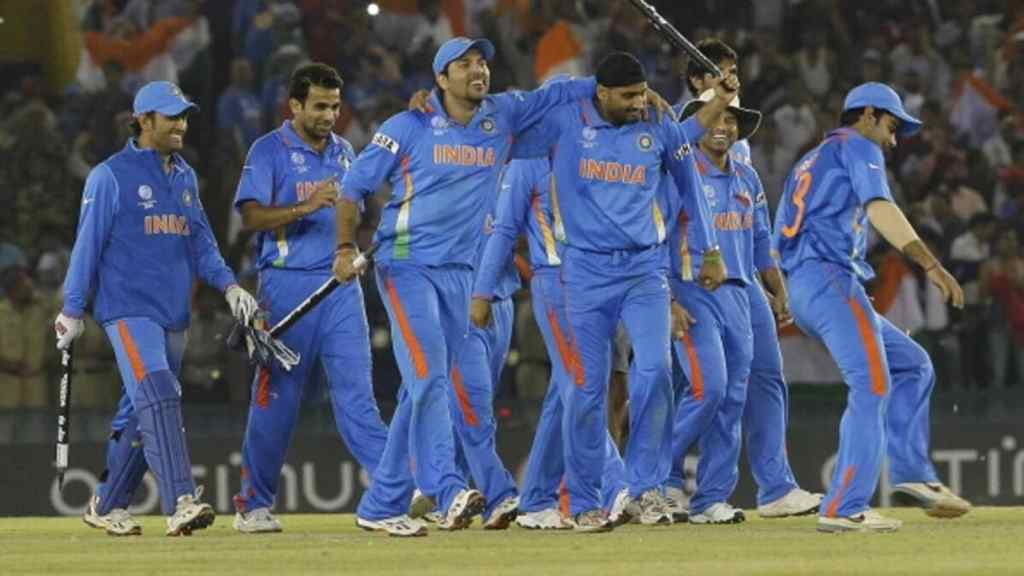
2011 World Cup Semi-Final: India won the match by 29 runs, with Sachin Tendulkar once again leading the batting charge for India.
2017 Champions Trophy Final: Pakistan won the match by 180 runs, with Fakhar Zaman’s century and Mohammad Amir’s three-wicket haul being the highlights of the match.

Sources: 

  1. https://timesofindia.indiatimes.com/sports/cricket/asia-cup/asia-cup-2022-india-vs-pakistan-how-the-t20i-numbers-stack-up/articleshow/93776912.cms
  2. https://www.sportskeeda.com/cricket/5-times-india-and-pakistan-faced-each-in-the-finals-of-odi-tournaments
  3. https://www.gqindia.com/content/cricket-india-vs-pakistan-match-who-won
Blog 23 – From Palms to Racquets: The Evolution of Tennis Paraphernalia

Tennis is a sport that has evolved significantly over the centuries, and so too has the equipment used to play it. From the early days of wooden racquets and hand-sewn balls to the high-tech, lightweight equipment used by modern tennis players, the history of tennis equipment is a fascinating one.

Early Equipment:

Tennis originated in 12th century France as a game called “jeu de paume” or “game of the palm”. 

Players would use their hands to hit a ball made of wool or hair-stuffed leather. In the 16th century, racquets began to replace hands as the primary means of hitting the ball, with wooden racquets made of ash, elm, or pear being used. These racquets had small heads and long handles, and the strings were made of animal gut or sheep intestines.

The 19th Century:

In the 19th century, tennis underwent significant changes in equipment. The first lawn tennis tournament was held in 1877, and players began to experiment with new racquet designs. In 1875, a new material called “laminate” was invented, which was made by gluing thin strips of wood together to create a stronger, more flexible racquet. These early laminate racquets had larger heads and shorter handles than their predecessors, and were more comfortable to play with.

The 20th Century:

The 20th century saw further advances in tennis equipment. In the 1920s, steel began to be used to make racquets, which was lighter and more durable than wood. In the 1960s, aluminum and graphite began to be used to make racquets, which further reduced their weight and increased their strength. In the 1970s, oversized racquet heads were introduced, which gave players more power and control over their shots.

In the 1980s, the tennis ball underwent a significant change. Prior to this decade, tennis balls were made of a hard, rubber core covered in wool or nylon. In the 1980s, a new type of ball was introduced, made of a pressurized core covered in a felt-like material. These new balls had more bounce and spin than their predecessors, and made the game faster and more exciting.

Modern Equipment:

Today, modern tennis equipment is highly specialized and technologically advanced. Racquets are made of lightweight materials such as carbon fiber, and are designed to provide maximum power and control. Strings are made of synthetic materials such as polyester, which offer greater durability and spin than natural gut strings. Tennis balls are highly pressurized, with specific regulations on weight, size, and bounce.

The evolution of tennis equipment is a reflection of the changing nature of the sport. From the hand-sewn balls and wooden racquets of the past to the high-tech, specialized equipment of today, tennis equipment has come a long way. As the sport continues to evolve, we can expect further changes in equipment to help players to perform at the highest level.

Sources: 

  1. https://www.doittennis.com/knowledge-center/tennis-history

Blog 22 – Cricket through the years, and India’s adoption

Cricket is a popular sport that has a long and rich history, tracing its origins back to the 16th century in England. The early versions of the game involved players hitting a ball with a club or stick and trying to score runs by running back and forth between two sets of sticks, or wickets. Over time, cricket evolved into the sport we know today, with standard rules, equipment, and venues.

The first recorded cricket match was played in the 16th century in southeast England, and by the end of the 17th century, the sport had spread throughout England and was being played by both the aristocracy and the common people. The first international cricket match was played in 1844 between the United States and Canada, and by the end of the 19th century, cricket had become a popular sport throughout the British Empire, including India.

India’s relationship with cricket dates back to the early 1800s, when British soldiers and sailors first introduced the sport to the country. Cricket quickly gained popularity in India, and by the late 19th century, Indian cricketers were competing against teams from other parts of the British Empire. The first recorded cricket match in India was played in 1848 in Calcutta (now Kolkata), and the first Indian cricket club was established in Bombay (now Mumbai) in 1848.

In the early 20th century, Indian cricket continued to grow and develop, with the formation of the Board of Control for Cricket in India (BCCI) in 1928 and the first-ever Test match played by an Indian cricket team in 1932. The Indian cricket team had its ups and downs in the years that followed, but by the 1970s and 1980s, Indian cricket had firmly established itself as a major force in the sport, with players like Sunil Gavaskar and Kapil Dev leading the team to several victories.

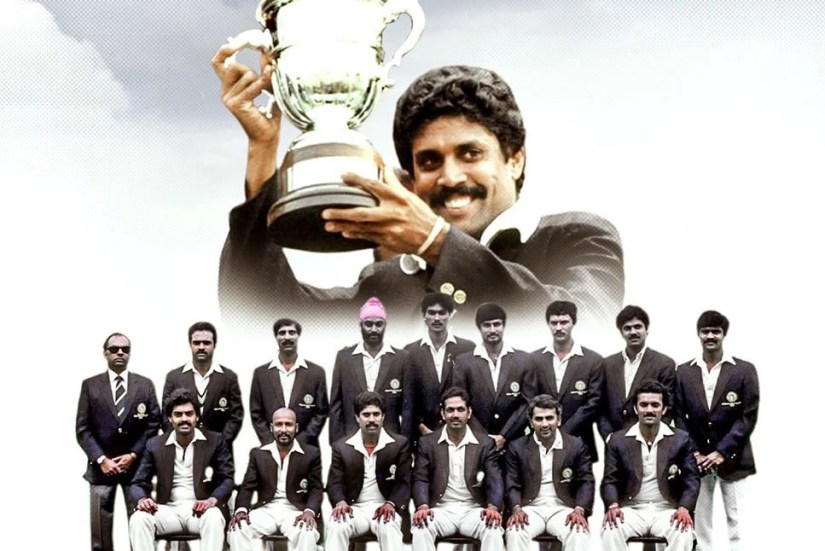
One of the biggest moments in the history of Indian cricket came in 1983, when the Indian cricket team won the Cricket World Cup for the first time. This triumph was a major milestone for the sport in India and helped to increase its popularity and reach even further. In recent years, Indian cricket has continued to grow, with the Indian Premier League (IPL) becoming one of the most popular T20 cricket leagues in the world.

Today, cricket is an integral part of Indian culture, with millions of fans across the country and some of the most talented cricketers in the world. From its early days as a sport played by British soldiers and sailors, to its current status as one of the most popular and widely played sports in India, the history of cricket in India is a rich and fascinating story of growth, development, and success.

In conclusion, the history of cricket in India is a testament to the sport’s universal appeal and its ability to bring people together from all walks of life. From its early beginnings as a game played by British soldiers and sailors, to its current status as one of the most popular and widely followed sports in India, the story of cricket in India is one of growth, development, and success. The sport has played an important role in shaping Indian culture, bringing people together and providing a source of national pride and unity. Whether you are a seasoned cricket fan or just starting to learn about the sport, the history of cricket in India is a rich and fascinating subject that is well worth exploring. With its continued growth and popularity, it is clear that the future of cricket in India is bright, and that the sport will continue to be an important part of Indian culture for many years to come.

Sources: 

  1. https://www.espncricinfo.com/story/some-dates-in-indian-cricket-history-152361
  2. https://stevewaugh.com.au/pages/the-history-of-cricket-in-india
  3. https://www.indianmirror.com/games/cricket/cricket-history.html

Blog 21 – A Walk Down the Tennis Avenue: History of the game

Tennis is a sport that has a long and rich history dating back several centuries. The origins of the game can be traced back to ancient civilizations such as Greece, Rome, and Egypt, where versions of the game that involved hitting a ball with the hand or a racket-like object were played.

During the Middle Ages, a game known as jeu de paume, which involved hitting a ball with the hand, became popular in France. This game eventually evolved into a version played with rackets, and it was known as “real tennis” or “court tennis”. This version of the game was played by the elite, and it was primarily played in indoor courts.

In the late 19th century, a modified version of the game known as “lawn tennis” was developed, and it was designed to be played on outdoor grass courts. This version of the game quickly gained popularity, and the first Wimbledon tournament was held in 1877. The All England Lawn Tennis and Croquet Club in Wimbledon, London, became the sport’s first official governing body.

The game continued to evolve and gain popularity in the early 20th century. The first US Open tournament was held in 1881, and the first French Open tournament was held in 1891. The Australian Open was first held in 1905, and the first tournament in what is now known as the Davis Cup was held in 1900. The International Tennis Federation (ITF) was founded in 1913, and it became the sport’s governing body.

Tennis has a long and rich history, and there have been many great players throughout the years. Some of the first notable tennis players of all time include William Renshaw, who was one of the leading players of the late 19th century and won the Wimbledon Championships seven times in the early 1880s. Another early notable player was his brother Ernest Renshaw who also won the Wimbledon Championships twice and was known for his powerful serves and volleys. Another early player is Maud Watson, the first female Wimbledon champion, who won the tournament in 1884. Other notable early players include Helen Jackson, Charlotte Cooper, and Blanche Bingley Hillyard, all of whom were successful in the late 19th century and early 20th century. These players were some of the first to make a name for themselves in the sport of tennis, and they helped to establish the foundations for the modern game as we know it today. They all were known for their powerful play and aggressive style, which was common in their era, but also for their competitive spirit and sportsmanship which is still an essential part of the game today.

In the 1920s and 1930s, players such as Bill Tilden, René Lacoste, and Helen Wills Moody dominated the sport and helped to establish tennis as a major international sport. The first official World Championships, now known as the ATP World Tour Finals, was held in London in 1970.

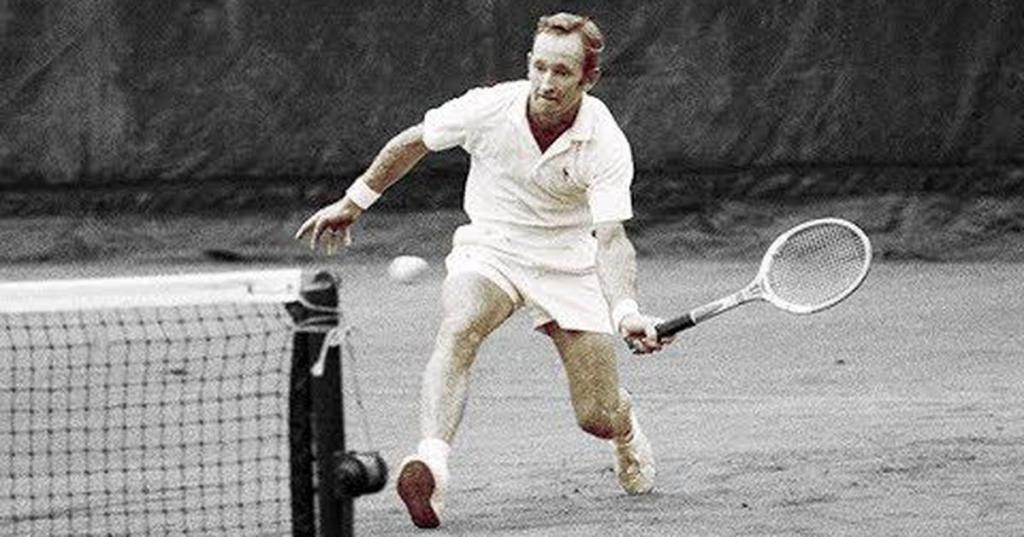
In the 1960s and 1970s, players such as Rod Laver, Bjorn Borg, and Chris Evert helped to popularize the sport even further and made it even more competitive. The Open Era, which allowed professional players to compete in Grand Slam tournaments, began in 1968. This opened up new opportunities for players and made the sport more exciting for fans.

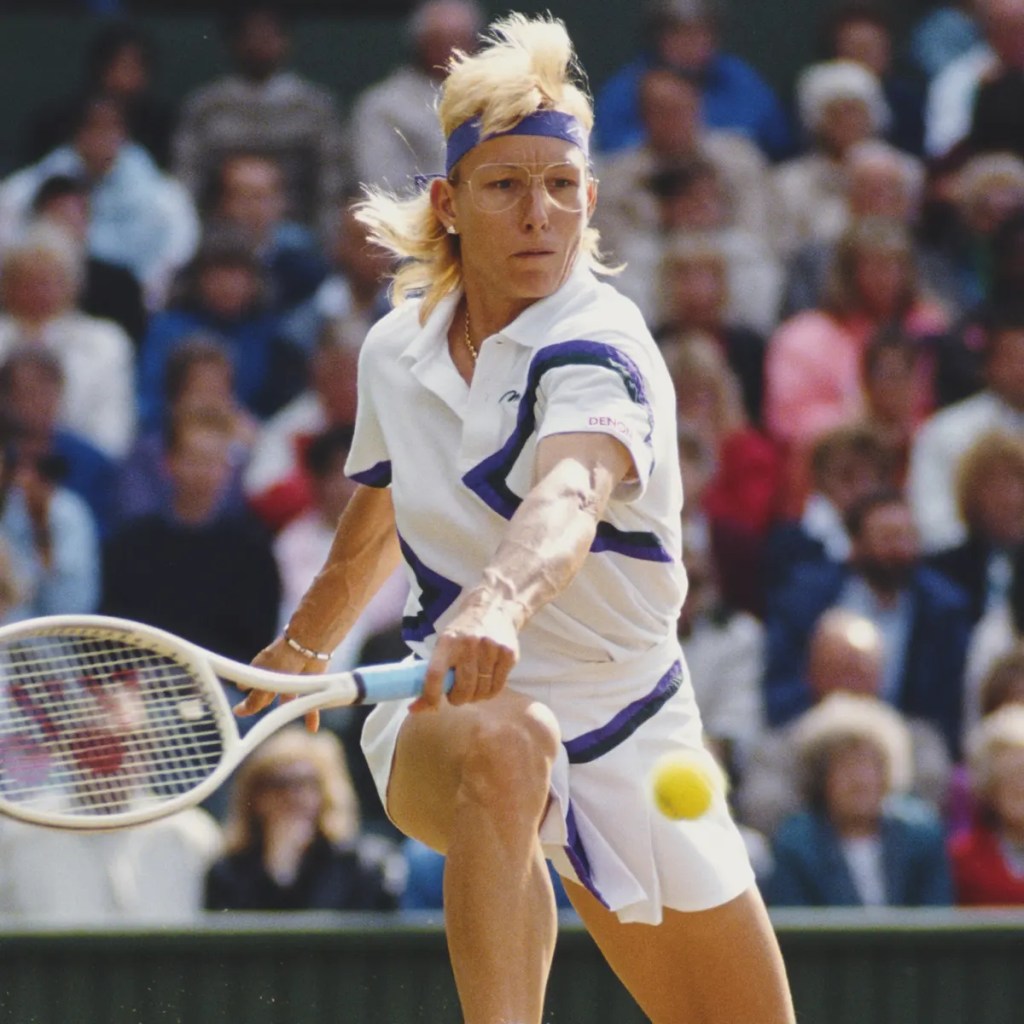
In the 1980s and 1990s, players such as Ivan Lendl, Stefan Edberg, Pete Sampras, and Andre Agassi dominated the sport and helped to establish tennis as a major global sport. Women’s tennis also saw great players such as Martina Navratilova, Chris Evert, Steffi Graf, and Monica Seles. In the 2000s and 2010s, players such as Roger Federer, Rafael Nadal, Novak Djokovic, Serena Williams, and Venus Williams continued to dominate the sport and set new records. The game continues to evolve, with new technologies and techniques being introduced, and more international players are joining the professional circuit, making the game more competitive.

Overall, the history of tennis has been marked by the evolution of the game, the introduction of new technologies and techniques, and the emergence of new stars and champions. The sport has grown in popularity and has become a major international sport, with millions of fans around the world.

Sources: 

  1. https://www.britannica.com/sports/tennis
  2. https://olympics.com/ioc/news/a-brief-history-of-tennis
  3. https://www.tennistheme.com/tennishistory.html

Blog 20 – When Bollywood bats for Cricket

There is very little surprise when it comes to the devotion of the Indian subcontinent with its history of cricket. India has for long been associated with the sport of cricket, with its fame and glitter not reducing at all even in the most contemporary times. The duration and the mode of the game might have changed over the years but the fervor has remained all the same. Cricket has been at the center of many stellar moments in the history of India and that has included good and bad. It is safe to say that Indians hold their cricketing legacy very close to their heart and would stop at nothing to be able to live out their dreams in the form of IPL, World Cup, or the most quintessential form – the gully cricket. 

All these forms of cricket have inspired artists and filmmakers to come up with masterpieces of work, which have represented the soulful connection that Indians have with the game. Bollywood – one of the most watched and subscribed Indian film production houses, has made some movies over the years which have only reinvigorated our love for the game. Here are some Bollywood movies which took upon themselves the daunting and perhaps beautiful task of creating cinema which is cricket-centric: 

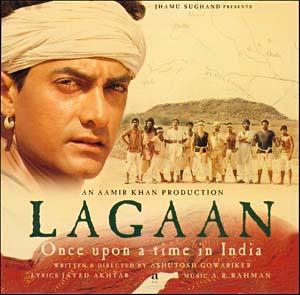
  1. Lagaan 

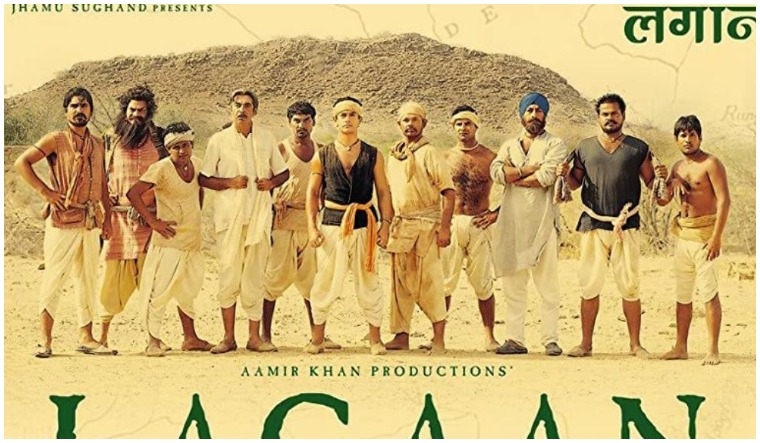
Without a question, Lagaan sets the bar for movies about cricket. In essence, it combines patriotism and cricket. The plot centers on a small town where people struggle to survive during the British era, when poor Indians were subjected to hefty taxes. They are rudely challenged to play a game of cricket to avoid paying taxes by a haughty official. This challenge is accepted, and Bhuvan (Aamir Khan) gets the villagers ready for the game. The game turns interesting as Villagers need to hit a six in the final ball to win. While on strike, Bhuvan ultimately hit the ball hard to get it out of the ground and win the game.

  1. All Rounder (1984)

The first cricket-related movie after the Indian Team’s World Cup victory in 1983 is called All Rounder. Young cricketer Ajay (Kumar Gaurav) is the protagonist of the movie. With the help of his older brother Birju (Ajay Mehra), Ajay manages to earn a spot in the Indian Test team, but at the expense of Vikram, who was a star player (Shakti Kapoor). Vikram makes every effort to exact revenge on Ajay by getting him inebriated, but eventually, through his perseverance, he returns to the Indian side.

  1. Love Marriage (1959)

The top film on many of our lists of cricket-related movies is Love Marriage. In the movie Love Marriage, which was directed by Subodh Mukherji, Dev Anand plays the famous cricketer Sunil Kumar, who plays for his hometown team of Jhansi and resides with his brother’s family. Later, Sunil relocates to Bombay and resides in a leased home in order to attend a job interview. He marries Mala Sinha, the landlord’s daughter, after falling in love with her. Mohammad Rafi and Lata Mangeshkar’s renowned duet number from this movie is its claim to fame. Chal Chand Gagan Mein, Dheere Dheere.

  1. Stumped (2003)

As a producer, this was Raveena Tandon’s first picture. The film’s plot is introduced while India battles Pakistan in Kargil; however, the English-language Cricket World Cup was also taking place at the time. When their neighbor Major Raghav Seth enlists in the military and goes away, the residents of Happy Home Society are eager to watch the World Cup. Due to the focus on cricket in society, Raveena, his wife, is powerless. Sachin, Kapil Dev, and Yuvraaj Singh were just a few of the cricket players who appeared in this movie.

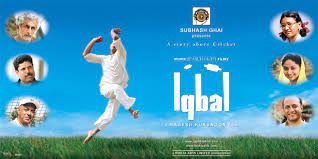
  1. Iqbal (2005)

One of the best Bollywood cricket movies is Iqbal, which also has a positive message for our society. Iqbal (Shreyas Talpade), a young cricketer who is deaf and dumb and aspires to play for India, has financial difficulties and has a father who disapproves of the sport. However, with the help of an ex-player (Naseeruddin Shah), he is able to fulfill his ambition.

Sources: 

  1. https://en.janbharattimes.com/entertainment/bollywood-cricket-movies-of-all-time
  2. https://filmykeeday.com/best-movies-based-on-cricket-in-india-hindi-movies/

Blog 19 – Now Featuring: Top Tennis Cinema

Much to the delight of tennis fans, this sport is present all over the world, with almost every region and country having its own love for tennis. Cricket, for instance, is a largely Indian sport and wanders in the Indian subcontinent more than it does anywhere else. Not just in the form of tournaments, but also in the form of gully cricket, which provides respite to the children of the Indian cities. 

With Tennis, however, there is a certain cult following as well, with people cheering on their favorite sports superstars. In that spirit, artists and filmmakers who were fans of tennis and the world around them, used the best of their talent to exhibit the love and wonder of the game. Here are some of the movies which tennis lovers should not miss: 

En Español 

Will Smith, 53, is receiving a lot of Oscar hype for his upcoming biopic King Richard, which will be released in cinemas and on HBO Max on November 19. The remarkable true story of Richard Williams, the father and coach of two of the most unquestionably powerful players of all time—Venus and Serena Williams—is being directed by upcoming director Reinaldo Marcus Green. Hollywood has produced relatively few films about tennis, compared to the dozens, if not hundreds, of movies about baseball, football, basketball, and even hockey, despite the high stakes drama on and off the court. These nine tennis-themed movies, which range from absurd indie comedy to true-life dramas, will make an excellent “doubles feature” alongside King Richard.

Battle of the Sexes 

The story revolves around the real-life 1973 matchup between future feminist icon Billie Jean King (Emma Stone) and outspoken male chauvinist Bobby Riggs (Steve Carell, 59), who boasted that at age 55, he could defeat any female tennis player. The film was directed by Little Miss Sunshine’s Jonathan Dayton, 64, and Valerie Faris, 63. Despite being a box office failure, the movie received a Golden Globe nomination for its two actors, Riggs and King, who are practically the same age. The movie does a fantastic job of capturing all the pomp and circumstance that surrounds the match, including the giving and receiving of symbolic gifts: King gave Riggs a small pig and Riggs gave him a large Sugar Daddy. 

You can watch it on YouTube, Google Play, Apple TV, and Amazon Prime.

Match Point

You’re in for a surprise if you expect one of Woody Allen’s urban comedies: More so than Annie Hall, this vile, brutish thriller has more in common with Alfred Hitchcock. Irish tennis pro Chris Wilton (Jonathan Rhys Meyers) works at a club in London where he meets affluent customer Tom (Matthew Goode) and soon starts dating his sister Chloe (Emily Mortimer, 50). But when Chris begins a passionate romance with Tom’s American fiancée Nola, things become complicated (Scarlett Johansson). Numerous metaphors involving tennis balls striking nets, fate, and luck follow. Attention, Succession fans: the father of Tom and Chloe is played by 75-year-old Brian Cox. There are numerous allusions to Crime and Punishment by Fyodor Dostoevsky throughout the movie. ​

Wimbledon 

In this romantic comedy set in England about two tennis players at very different stages of their careers, Paul Bettany, 50, harnesses his inner Hugh Grant from the 1990s. Peter Colt, a failed British athlete, dropped from 11th to 119th place in the standings. He’s starting to confess to himself that it might be time to retire and work as a tennis pro at a swanky club despite earning a wild-card slot at the championship tennis tournament. To the dismay of her father and manager, Dennis (Sam Neill, 74), who thinks a relationship will harm her rising career, Lizzie Bradury (Kirsten Dunst), an up-and-coming American player, enters the picture. Will their romance endure? Take a wild guess because it’s a romantic comedy. ​

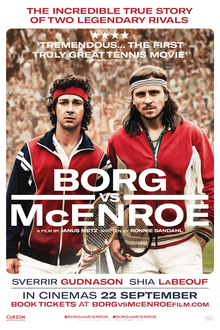
Borg Vs McEnroe

Only 14 times between 1978 and 1981 did the two tennis greats square off, but their rivalry endures to this day. That has a lot to do with their polar opposite personalities and playing philosophies, which are brilliantly captured in this Swedish biopic that traces the events leading up to their fierce confrontation at the 1980 Wimbledon tournament. The movie shows that Björn Borg (Sverrir Gudnason) and John McEnroe (Shia LaBeouf) were far more alike off the court than they thought, which may explain their real-life, decades-long friendship. Björn Borg is the cool and quiet Swede, and John McEnroe is the profanity-spewing American hothead.

Sources: 

  1. https://tennispredict.com/best-tennis-movies-ever-made/
  2. https://www.aarp.org/entertainment/movies-for-grownups/info-2021/best-tennis-movies.html

Blog 18 – Stumped! Fixing Controversies that Shook the World 

Cricket has a reputation as a gentleman’s sport. In countries such as India, the game is even worshiped and considered as a religion, with the sentiments of billions of people associated with it. Such a love for the game has brought a lot of money into it, with the players making great fortunes for themselves through their brilliance in the sport.

But numerous episodes have severely tarnished the “beautiful game.” One of the numerous things that has damaged the reputation of the game is the match-fixing incident. The following are some of the most well-known cricket match-fixing scandals that have weakened the sport’s ethical cohesion:

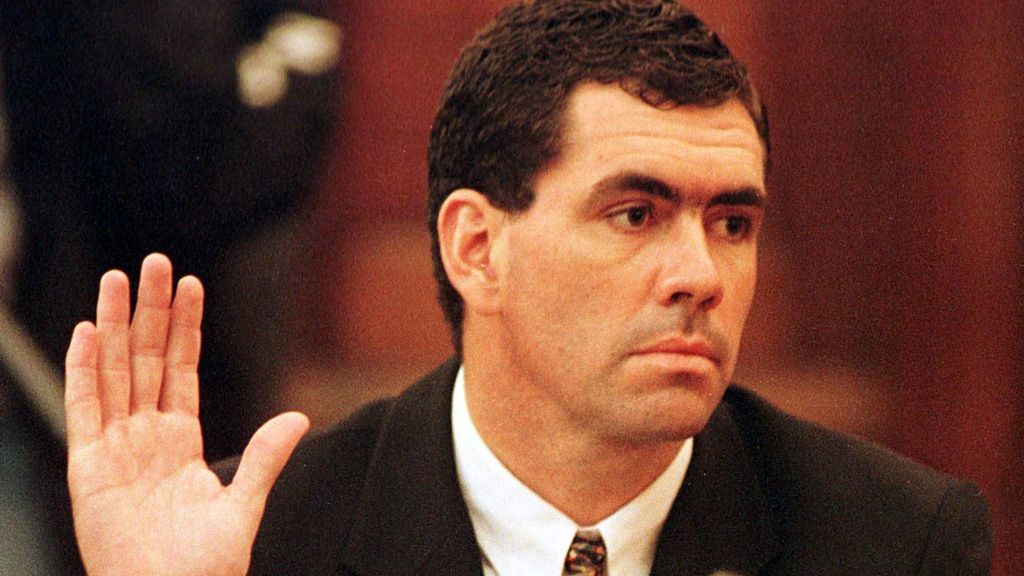
Hansie Cronje: 

The chats between South African captain Hansie Cronje and bookmaker Sanjeev Chawla were recorded by Delhi Police in 2000. Even though Cronje originally refuted the Delhi Police’s allegations, he later broke down and admitted all of his wrongdoings. As a result, Cronje received a suspension for the entirety of his life. When he mysteriously perished in a plane crash in 2002, there were rumors that Cronje had been assassinated because of match-fixing.

The Pakistan Fix: 

Mohammad Asif and Mohammad Amir were two gems that Pakistani fast bowlers had discovered. They were correctly predicted to be the Wasim Akram and Waqar Younis of the next generation. However, Asif and Amir both succumbed to avarice when they were discovered throwing pre-planned no-balls at the English batsmen during a Test match at Lords. They overstepped the bowling crease by a foot to deliver their balls since they were so focused on bowling the no-ball. Investigation results showed that Salman Butt, the captain at the time, had meticulously planned out how his bowlers would strike. The group received harsh punishment. Even though Amir resumed playing cricket after a 5-year absence, a stain has been left behind.

The Azharuddin Incident: 

Mohammad Azharuddin was a player of the highest calibre and one of the greatest batsmen to have ever represented India. He led India wonderfully in the 1990s and was a fantastic captain. But the shadow of match-fixing was one occasion that profoundly changed his life. During one of the inquiries, his name came up. Hansie Cronje, a former captain for South Africa, acknowledged that Azharuddin had introduced him to the bookmakers. A legacy was permanently tarnished.

How India was Affected: 

The biggest match-fixing scandal in Indian cricket was revealed when Manoj Prabhakar came forward as a whistleblower and implicated numerous players. Players like Kapil Dev, Ajay Jadeja, Ajay Sharma, and Manoj Prabhakar were implicated in the mess of match-fixing, according to a thorough investigation into the situation.

The IPL Debacle: 

The much-discussed IPL was not exempt from the grip of spot-fixing. The IPL controversy involving spot-fixing occurred in 2013. The IPL governing board banned players like S. Sreesanth and Ajit Chandila for life as a result of this controversy. The primary co-owners of the Chennai Super Kings (Gurunath Meiyappan) and Rajasthan Royals (Raj Kundra) were found to be guilty of gambling after a thorough investigation in 2015. As a result, they were both barred from playing cricket, and CSK and RR were also suspended for two years from the league. Since then, IPL has consistently been the subject of spot-fixing investigations.

Sources: 

  1. https://stumpsandbails.com/five-biggest-match-fixing-scandals-in-cricket/

Blog 17 – 4 plus 6 is a Win: Best Underdog Wins in Cricket History

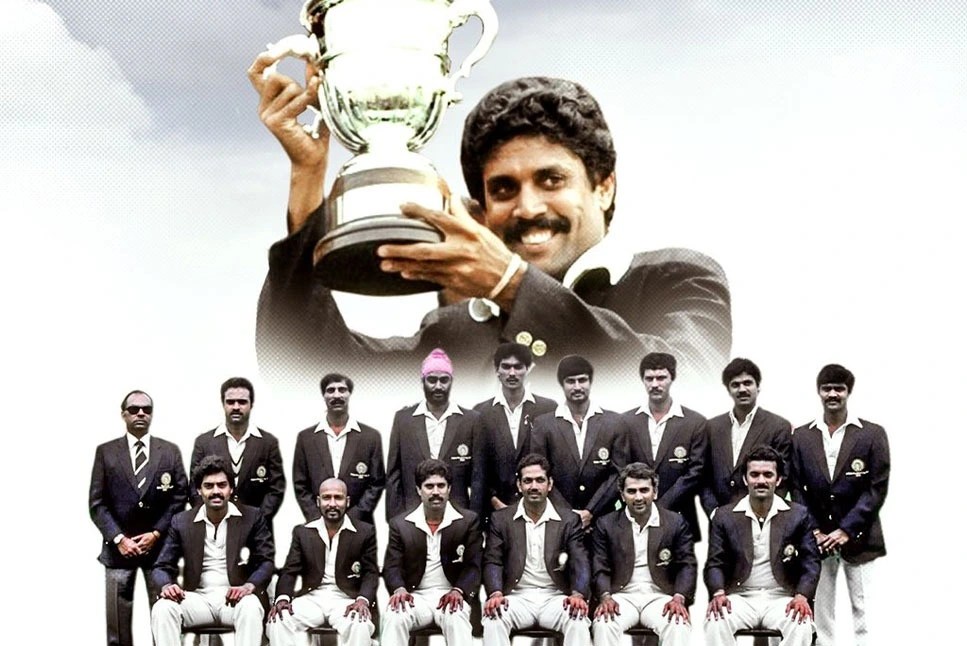
One of the most amazing things about sports is watching an underdog overcome all the odds and rise to the top, much to the delight of many script whirlwind heists. When it comes to cricket, nothing compares to what Team India, led by Kapil Dev, accomplished in the summer of 1983 when they overcame West Indies in the championship match at Lord’s.

However, there have been few instances in the last 20 years where an underdog went on to defeat the odds and win a world championship. 

Before the competition, oddsmakers had given India a 66-1 shot at winning the World Cup. India pulled off the unthinkable by holding the powerful West Indies, which included batsmen like Desmond Haynes, Gordon Greenidge, Viv Richards, and Clive Lloyd, to a meager 183 runs. The most excellent lineup at the moment. One of the greatest cricket underdog victories for the subcontinent came against a strong West Indies team.

Here are some instances of brilliant underdog victories managed marvelously by newbies: 

West Indies vs. Kenya, 1996 World Cup 

Chanderpaul led the way with 19 runs as the West Indies were bowled out for 93 when chasing a modest total of 166 against the underdog Kenya. It was Kenya’s first-ever victory in official ODIs, which made it all the more intriguing that extras were the leading Kenyan scorers in this game. It was also the first occasion that the West Indies had lost to an associate country. Nevertheless, despite Kenya’s shocking loss.

Zimbabwe vs. India, 1999 World Cup 

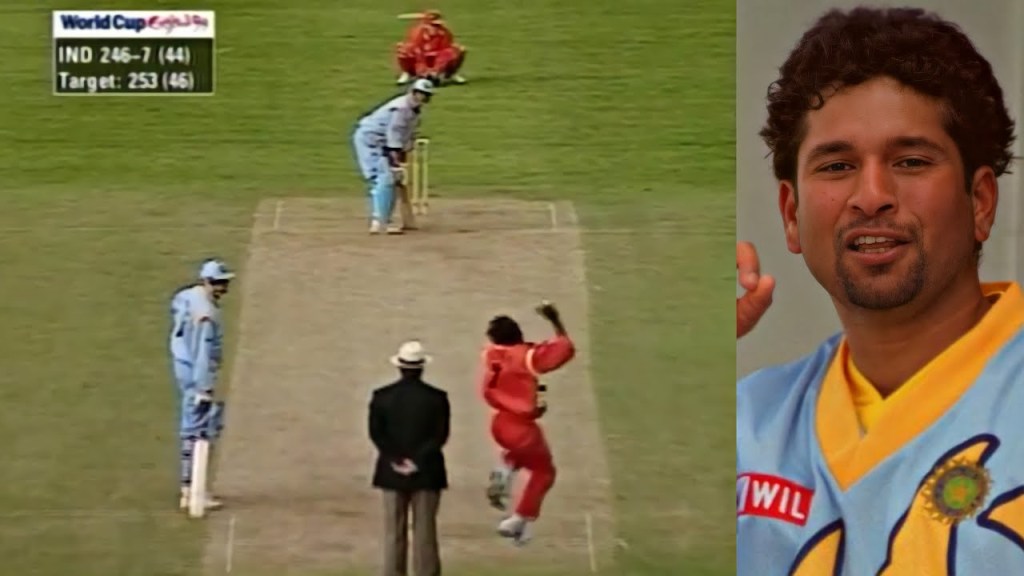
In their match against India at the 1999 World Cup’s Group stage, Zimbabwe grabbed victory from the jaws of defeat. India lost 3 wickets in 5 balls for 3 runs, finishing at 246/7 in 44.1 overs while chasing 253 from 46 overs, losing the match by 3 runs. The final 3 wickets were taken by Henry Olonga. Grant Flower’s 68 helped Zimbabwe score 252 from their 50 overs earlier in the game, and India was penalized 4 overs for their slow over-rate. The fact that India was competing without their star Sachin Tendulkar didn’t assist their cause.

Pakistan vs. Bangladesh, 1999 World Cup 

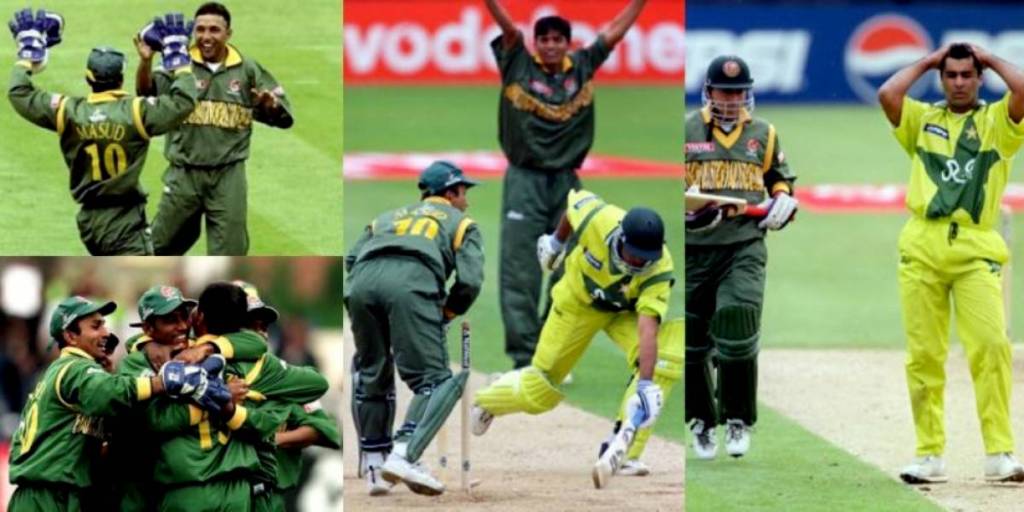
When Bangladesh defeated Pakistan by a commanding margin of 62 runs in their World Cup debut, they pulled off a major shock. Batting first, Bangladesh produced 223 with Akram Khan leading the way with 42 points. Pakistan’s team, who was tasked with chasing the score, got off to a horrible start and was reduced to 42-5 before being all out for 161. In Bangladesh, a holiday was proclaimed to commemorate this triumph.

2005’s Australia vs. Bangladesh: 

A tri series between Bangladesh, England, and Australia took place in England. While batting first, Australia struggled but eventually reached 249 thanks to fifty-plus scores from Martyn and Clarke. When Bangladesh was 72-3 in the 21st over of the target chase, and Australia appeared to be firmly in control, a young Bangladeshi named Mohammed Ashraful produced a superb hundred and partnered for 130 odd runs with the captain Habibul Bashar. The audience at Sophia Gardens went wild as Aftab Ahmed hit a six to end the game. One of the biggest cricket underdog victories occurred when Bangladesh defeated the powerful Australia while they were regarded as minnows at the time. 

Ireland vs. England, 2011 World Cup

Ireland defeated England at Chinnaswamy Stadium in Bangalore by chasing down a massive 330 while playing in just their second world cup. At the midway point of the inning, Ireland took the batting powerplay because their necessary rate had grown to 8. Kevin O’Brien got going on the English Bowlers and quickly set a World Cup record for the fastest century by finishing it off in just 50 deliveries. Ireland successfully surpassed the goal with 5 balls remaining, shocking the cricketing world.

2011 bilateral series between Zimbabwe and New Zealand: 

New Zealand had won the series, so they were aiming for a clean sweep. The Kiwis were the favorites to win the game after scoring 329 runs in their first innings of play thanks to centuries from Ross Taylor and Ken Williamson. After 30 overs, Zimbabwe had scored 183/5 thanks to more than run-a-ball fifties from Taylor and Taibu.

Sources: 

  1. https://www.essentiallysports.com/top-10-cricket-underdog-victories/
  2. https://cricketaddictor.com/cricket/underdog-teams-icc-event-21st-century/

Blog 16 – Thank You, God: Understanding Cricket as India’s Most Popular Religion

Cricket in India underwent a permanent identity change on June 25, 1983. India’s historic victory in the 1983 Cricket World Cup stunned the world, and every Indian was ecstatic about the achievement. In addition to winning the World Cup that year, the Indian cricket team also won the World Championship Trophy. After that, cricket was never just a sport.

Cricket, as we know it – that game of bats and balls, that game of pitching your best shot across the furthest reaches of the field boundary, and yet in moments restrict the momentum of the shot to a bare minimum – is a game that is played all across the world. It is perhaps easy to access the fun of this game, because all you require is something you can hit with, and something to hit across the skies. 

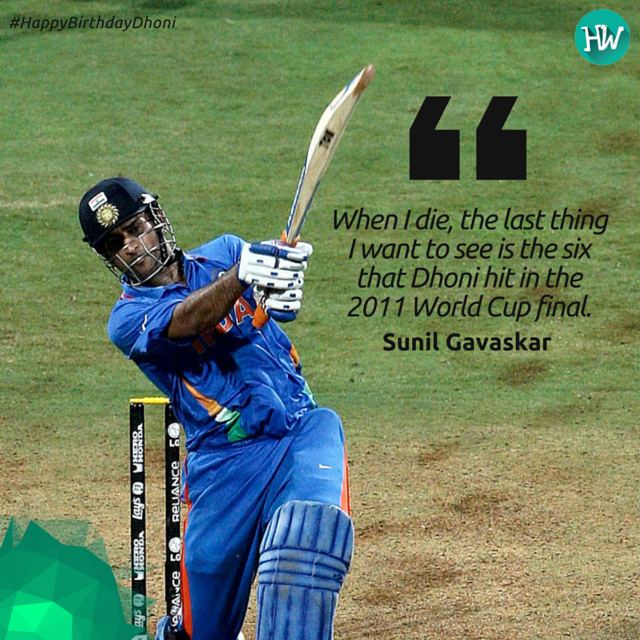
In India, this game has reached perhaps the highest level of sanctity with Oscar nominated film Lagaan showcasing just exactly how religious and personal the game is to a country which is deeply religious in its existence. Bollywood and cricket are two things that Indians cannot live without. We can all remember that one crucial cricket moment when we were on the edge of our seats hoping and praying for India to win, whether it was the crucial wicket in the 1983 World Cup or the match-winning six played by none other than the captain himself in the 2011 World Cup. In this nation, cricket is practically a religion.

In plain terms, cricket may be compared to the unifying force of the Indian subcontinent; it creates an unbreakable tie between the nation that is fueled by love, a sizable fan base, and respect for all Indian cricket players. There is always a sense of community, brothers, and unadulterated passion for the game, whether fans are watching a game in the stadium, at home, or via the glass door of a posh restaurant. When you watch India play cricket, no one will ever ask you about your religion or your line of work because you are absorbed in the game, which has the elusive ability to unite, heal, and forgive.

The severity of the emotion around the game can be felt especially in the game between India and Pakistan, which can take celebration and destruction both to new levels. In a nation like India, where various religions are accepted as part of its secular constitution, cricket is the religion that unites supporters like no other. 

Some claim that hockey is the nation’s national sport, although by a significant margin, cricket can be considered the sport with the largest fan base. India’s national sport is cricket, which has millions of devoted devotees. The fervent cricket fans greatly adore Men in Blue, and their fame surpasses that of any other star.

The quickest method to make friends with an Indian is through cricket. Anywhere in India, one may see a group of young people playing cricket with a lot of excitement. 

It was frequently claimed that cricket was on the decline in England, the sport’s birthplace. With England winning the 2019 World Cup, things have just changed, but can they compare to what cricket has achieved in India? Doubtful. Cricket seems to have lost its luster even in the West Indies. Aside from the T20 mania, only a small number of people follow cricket in nations like Pakistan, Sri Lanka, Zimbabwe, New Zealand, and even a strong nation like South Africa.

Sources: 

  1. https://www.sportspundit.com/cricket/articles/5500-cricket-is-a-religion-in-india
  2. https://www.sportskeeda.com/cricket/why-cricket-unofficial-religion-india
  3. https://www.quora.com/What-makes-cricket-a-religion-in-India

Blog 15 – Beyond Boundaries: The Most Memorable Shots from the Decade

While no single cricket shot has ever decided the result of an entire game, there have been some shots that have gained significantly more significance than others either to the circumstances in which they were played or because of their contribution to the sport’s revolution. In the last ten years, cricket has undergone significant transformation, as evidenced by the way the game’s duration and laws have changed. Many novel methods have resulted from this development, but it has also challenged batsmen to adopt new ways of thinking and perform shots that were previously unimaginable.

With the introduction of T20 cricket, batsmen have begun to execute spectacular shots, much to the chagrin of the bowlers. We present to you a collection of shots that batsmen frequently execute and which thrill onlookers.

1. Brian Lara surpasses Garry Sobers with his record-breaking pull shot 

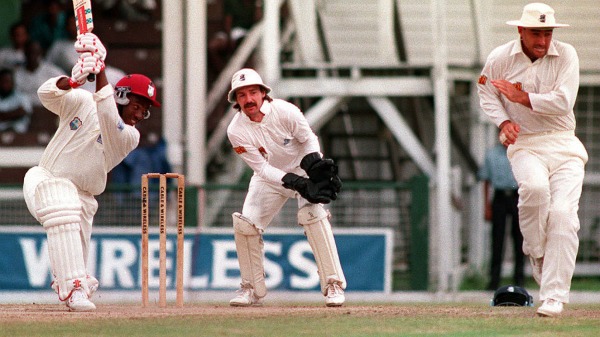
Brian Lara’s record-breaking 375 against England at Antigua in 1994 only served to confirm that this was a player with special abilities from the moment he made his West Indies debut. 

On a rather calm pitch on Day 1 of the Test, West Indies won the toss and elected to bat, but lost Stuart Williams early. To the pleasure of the sizable West Indian audience, that drew Lara to the crease. Over the following two days, he put on a batting feast for everyone present. On Day 2, he reached his triple hundred late in the day and concluded the day with 320.

The main focus was on seeing if Lara could exceed Sir Gary Sobers’ world record score of 365, which had been established against Pakistan in 1958. West Indies were comfortably on 502/4 heading into Day 3 and any outcome other than a draw seemed implausible. And Lara didn’t let us down. He rapidly caught up to Sobers on 365 before scoring four runs to pass the great man by pulling a short delivery from Chris Lewis to the midwicket fence. Lara’s efforts were recognised by Sobers, who was in attendance that day, who said at the time, “I don’t think a greater individual could have broken my record.”

2. Kevin Pietersen, Muttiah switch hit-off

Over the years, Kevin Pietersen has developed a reputation as a batsman who plays with abandon. The switch-hit, however, is a very absurd stroke to attempt even by his standards. 

For those who are unfamiliar, a switch-hit is a shot when a right-handed batsman reverses his hold on the bat handle and alters his stance just as the bowler is about to deliver the ball. 

The shot was originally used by Pietersen in a Test match against Sri Lanka at Edgbaston in May 2006, and while it has since been used frequently by other batters, the challenge of pulling it off cannot be understated.

4. Javed Miandad, last ball wonder at Sharjah 

Javed Miandad’s six off the penultimate ball of an ODI between Pakistan and India in Sharjah in April 1986 is undoubtedly the moment that best sums up the rivalry between the two nations in the 1980s. After all, Pakistan dominated for a large portion of the time, and Miandad’s talent played a significant role in that domination. 

In this specific case, the AustralAsia Cup final, Pakistan required 246 runs off of their 50 overs and was really playing with the eight-ball for the whole of the game. India was considered the favourite even heading into the final ball of the match, assuming you ignore Miandad’s brilliance, of course.

Miandad, who finished on 116* from 114 deliveries, went on to do two better when he hit a six over mid-wicket off a low full-toss from Chetan Sharma to give his team the championship. Miandad needed 4 off the final delivery. Sharma didn’t actually give the speech very poorly, but you didn’t need to in order to offend the street-smart Pakistani.

3. Sachin’s Shoaib uppercut

Before their Super Six matchup during the 2003 World Cup, the rivalry between Sachin Tendulkar and Shoaib Akhtar was at an all-time high in terms of anticipation. Of course, the two had a well-known history together, with Akhtar having sent Tendulkar out for a golden duck in their very first encounter, a Test match in Kolkata in 1999. 

However, Tendulkar was too self-assured of his prowess to permit a repeat of the last meeting. Tendulkar immediately broke the record with a superb upper cut over third man for six in Akhtar’s first over as they chased a challenging goal of 274 from 50 overs.

The ball was precisely the right length, just short enough for Tendulkar to spread his arms freely and take full advantage. 

Over the course of his 24-year international career, the Little Master may have made a lot more beautiful shots, but I doubt any of them had the kind of impact that this specific shot did. 

In order for India to surpass Pakistan’s total, which they accomplished with 6 wickets and 26 balls to spare, the then 29-year-old Mumbaikar needed to score 98 off just 75 deliveries.

5. MS Dhoni hits a sixer of all times

Indian cricket fans had to endure a long 28-year wait before experiencing World Cup triumph once more following the historic ICC Cricket World Cup victory of 1983. However, the wait was worth it thanks to Indian skipper MS Dhoni, who finished off a match-winning effort of 91* from 79 balls by slamming a breathtakingly high six off the bowling of Nuwan Kulasekara.

When Dhoni came out to bat, India was in trouble at 114/3, needing 275 runs from 50 overs to win. He managed to muster the guts to advance himself ahead of Yuvraj Singh, who in contrast was in the best shape of his life, despite being in bad form and having scored a total of 150 runs from eight matches prior to the final. Fortunately for Dhoni and India, the decision paid off. 

He didn’t make any hasty decisions in the beginning of his inning; instead, he batted one and twos, punishing the occasional lost ball in between. At the other end, Gautam Gambhir was in excellent form from the beginning of his innings and appeared poised to lead the side to victory.

After putting together a 109-run partnership with Dhoni, Gambhir was removed on 97. With 52 needed at a run a ball and 6 wickets in hand by that point, though, victory was within reach. With the Punjab left-hander on strike, Dhoni and Yuvraj went about their work calmly and soon only five runs off 12 balls were required. 

Yuvraj rotated the strike over, reducing the equation from 11 to 4, possibly feeling Dhoni’s desire to score the winning runs after putting in so much effort. Even one run at a time would have done the trick, but Dhoni frequently pulls off the extraordinary. And he duly did so once more, dispatching hapless Kulasekara over wide long-on for an enormous six that seemed to erupt in exuberant glee among the majority of the 42,000 spectators at the Wankhede that evening (there were a few Sri Lankans in the stadium as well).

Sources: 

  1. https://www.chaseyoursport.com/Cricket/Innovative-shots-in-cricket/90
  2. https://www.tbsnews.net/sports/10-biggest-moments-cricket-decade
  3. https://www.sportskeeda.com/slideshow/5-iconic-shots-cricket