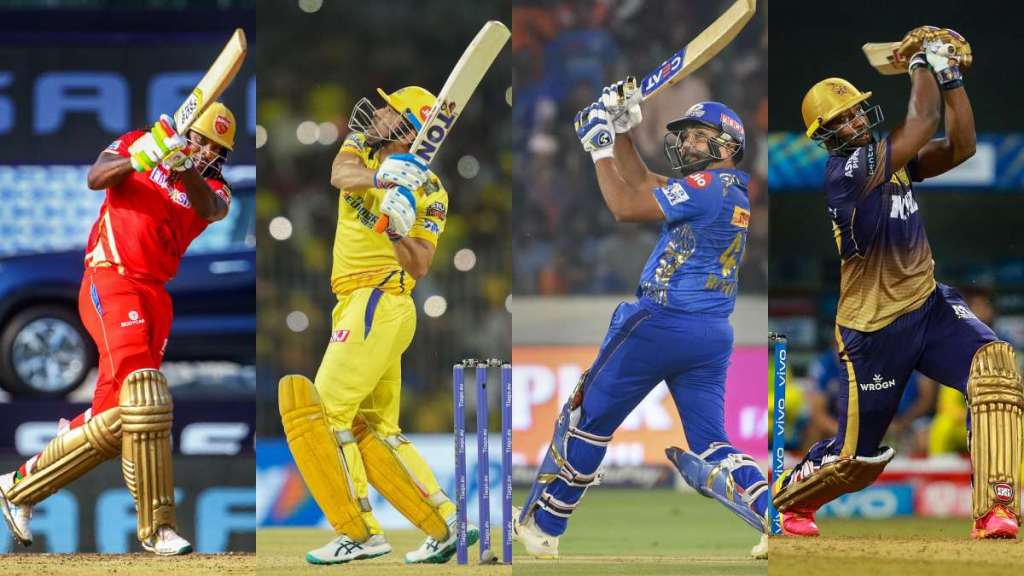

Blog 44 – The Cookie Crumbles: High Octane Moments from T-20 World Cups

Since its inception in 2007, the ICC Men’s T20 World Cup has delivered numerous high-octane moments that have captivated cricket fans all over the world. Unforgettable performances and high drama–it seems that the tournament delivered precisely the elements it was created to provide. Consider below some of the most intense and entertaining moments in T20 history, and keep in mind that this history is only 17 years old! 

The first of these moments happened in the very first year when Joginder Sharma became a national hero. India was playing against Pakistan, and needed only 6 runs from the remaining four balls. Sharma dismissed Misbah-ul-Haq, and S Sreesanth made the winning catch, securing India’s first T20 World Cup win. That same year, Yuvraj Singh, spurred by a fiery exchange with England’s Andrew Flintoff, smashed Stuart Broad for six consecutive sixes, leading India to victory over England. This victory was crucial for the team, as it became an important step in securing the tournament. 

In 2009, Pakistan’s Shahid Afridi had an unbeaten fifty in the final against Sri Lanka, securing Pakistan’s first and last T20 World Cup title at Lord’s. The next year saw the rise of West Indies’ Carlos Brathwaite who, with only 19 runs to defend in the last over, hit four consecutive sixes against England’s Ben Stokes, leading the West Indies to a well-earned victory. 

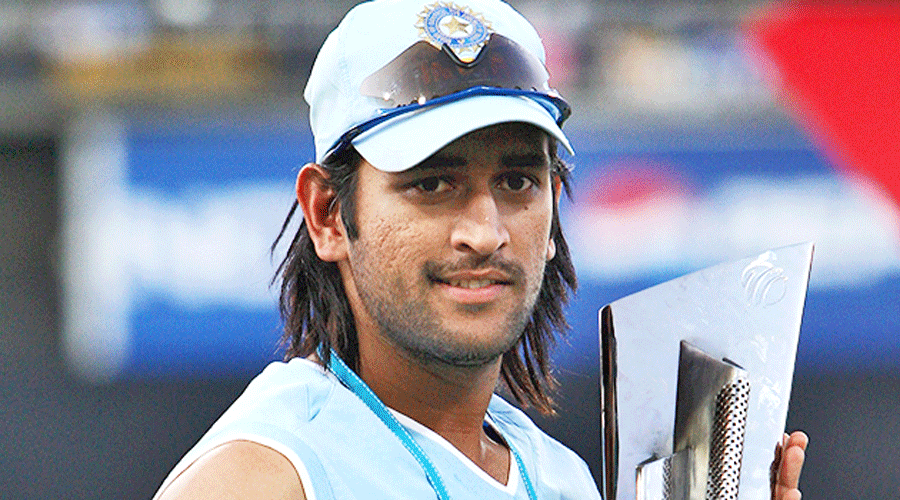
Another memorable moment came in 2016, when Indian superstar Virat Kohli made 82 runs despite his position at 31/4, when they were chasing Pakistan’s 160. Virat Kohli’s composure may have shown brighter than the final score board. Later that year, now-veteran MS Dhoni led the team to victory in a tight game with Bangladesh. Bangladesh needed only two runs from the last ball, but Dhoni’s quick thinking made him collect a missed ball and run out the batsman. It was a narrow victory for India, and one of the most entertaining moments in the history of the sport for a nation of cricket fans. 

This year, 2024, perhaps the most exhilarating moment did not come from one action that led to victory, when everyone sat at the edge of their seat. Instead, it was a full match that the whole watched completely shocked, as a new team in the mix, made up of engineers and part time cricket players led the USA to victory. The game was knotted at 159 runs,  Pakistan could only muster 13 runs, and the USA scored 17. No one saw it coming, as the highest expectation for the USA this year was that it had hosted a game that the nation had hardly made an impact on. 

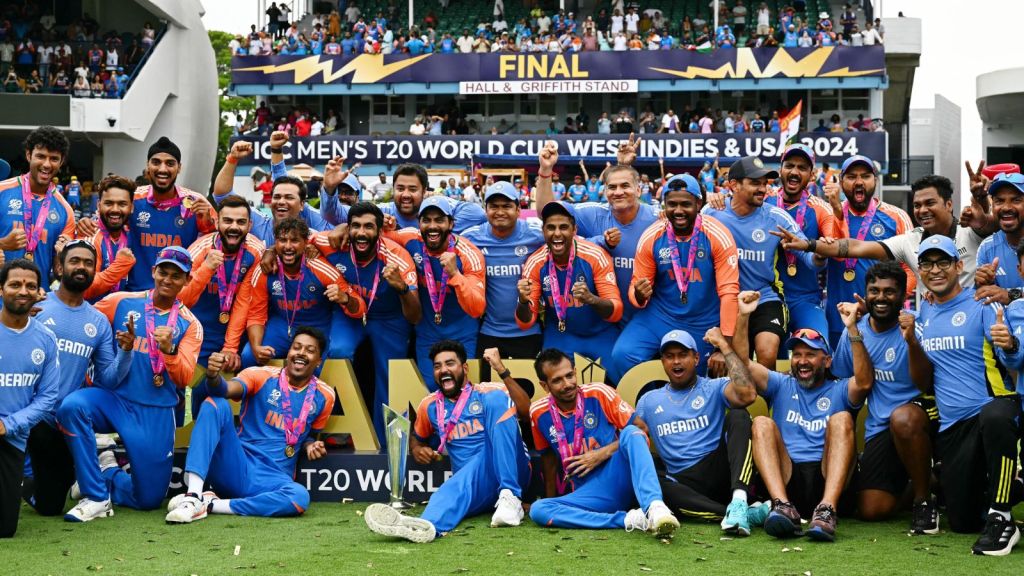
2024 saw India claim its second T20 World Cup title, as it went through the entire tournament unbeaten. That’s some achievement that epitomized how Rohit Sharma has led this team over the last few years and how the various departments in the team were manned by performers who are world-class in their own right. From Virat Kohli, Rohit Sharma and Surya Kumar Yadav to provide the initial batting impetus, to the all-rounders in Hardik Pandya, Ravi Jadeja, Axar Patel and Shivam Dube in the middle, to the final flourish in bowling that came from Jasprit Bumrah, Kuldeep Yadav and Arshdeep Singh towards the end, each of the games were stitched and sealed by India through a clinical performance.
It is easy to see why the T20 format would make for such interesting and thrilling moments in the sport. With higher stakes, shorter time and narrower margin for winning, the tournament has become one of the most watched in sports history. Sportsmen from all over the world have proven their skills against the fast clock of the 20 over tournament, and teams from around the globe have risen and fallen with the tides. 

Sources: 
  1. https://www.icc-cricket.com/news/icc-men-s-t20-world-cup-fancraze-greatest-moments-the-hunt-begins
  2. https://www.thedailystar.net/sports/sports-special/t20-world-cup-2024/news/t20-world-cup-greatest-moments-3612296

Blog 43 – Celebrating the Indian Premier League: A Real Game-Changer

Launched in 2008 by the BCCI, the Indian Premier League has become an intriguing part of the cricket landscape, converting what was (still is!) a gentleman’s game into a thrilling three-hour format. This is an annual men’s T20 tournament, and its vision was put forth after India won the inaugural World T20 Cup in 2007.  The proposal was simple: a series of teams, each representing an Indian city or region, composed of cricketers from across the world after an auction process. These teams play each other in a round-robin format after being divided into two groups, after which we have the playoffs, including two qualifiers, one eliminator, and of course, the final. 

India has always been obsessed with cricket, which serves as the highest-earning sport of the country, and the IPL took it to the next level. The first season of the league was watched by over 200 million Indians and 10 million overseas spectators, overtaking the English Premier League of football, whose record had been 150 million! This move by the BCCI was incredible, ushering in a new generation of cricket enthusiasts and even launching essentially a new segment of the sport – that of ‘cricketainment’, where sport meets celebrity. All the more because many of the teams are owned by beloved Bollywood stars and other publicly known personalities, and there’s a country-wide sense of excitement about attending the games to sight these stars. 

There’s an interesting analysis on how the IPL essentially turned noncustomers of India’s cricket industry into customers by understanding what they want. They identified three kinds of noncustomers: those who only watch cricket when India is playing due to their patriotism, and feel less invested when the country is knocked out of the tournament; those who find the sport long, boring, and complicated; and thirdly, those from foreign countries who will domestic Indian cricket uninteresting because there’s no common context. If one analyzes the structure of the IPL, one might note that the league has something to offer to each of these noncustomers! 

This, of course, has immense economic implications. A 2015 report by KPMG stated that the IPL was projected to add 11.5 billion to the Indian economy. 8 years later, this number will only be exponentially higher, especially since IPL has established international brand recognition. IPL remains so popular for many reasons: global star power, short and exciting matches, fusion of cricket and entertainment, fan loyalty and regional pride, and last but not least, its role as a platform for young and rising athletes. No matter how you feel about this new-ish entrant to the world of cricket, there’s no doubt that there’s a lot to celebrate!  

Sources:

https://pari-match-bet.in/blog/en/why-ipl-is-so-popular/

https://www.blueoceanstrategy.com/blog/how-the-indian-premier-league-reinvented-the-cricket-league/

https://www.linkedin.com/pulse/indian-premier-league-ipl-analyzing-impact-significance-kreedon

Blog 42 – The Coach’s Corner: Performance Strategies and Tactics in Professional Tennis

Tennis, a sport of finesse and power, has been a favorite of audiences, largely because of its dynamic gameplay and intense rallies. While physical prowess undoubtedly plays a significant role in a player’s success, the strategic and tactical aspects of the game are equally crucial. And behind every successful tennis player stands one of the most important stakeholders in any sport: the coach. In fact, the complexities of a game emerge from their mind, because they’re the ones analyzing opponents, brainstorming the best strategies (and adapting them in every situation!) and of course, helping the player play to their full potential – with all their strengths on their side, and their weaknesses accounted for. 

It all starts with technical expertise – mastering every single move. Coaches work with players to develop diverse serving arsenals,including flat, slice, kick, and topspin serves. These strategic techniques play an important role in dictating play, setting up advantageous positions and sometimes even directly winning points. Equally important is the return, of course, where a player has to anticipate serves from their opponents and make sure to strike a balance between strategy and aggressiveness. A coach will also help with court positioning, determining where it’s prudent to use an offensive or defensive approach (each with their own advantages). 

Plus, they emphasize the importance of shot selection, teaching their athletes to assess situations quickly and choose the most appropriate strokes. And coaching doesn’t end only at practice sessions; the best coaches are constantly vigilant during matches, identifying patterns and trends to inform strategic adjustments. This may involve altering serving patterns, targeting the opponent’s weaknesses, or in some cases changing court positioning to disrupt their rhythm. 

There’s a lot of lessons to be learned from iconic tennis coaches – not just about the sport, but also about life. Sven Groeneveld, who coached the legendary Maria Sharapova, speaks a lot about how essential it is to loosen up and relax, that the mind-body connection is crucial for success. And he’s not the only one who’s waxed eloquent about the mental game: Johan Kriek famously said “You may be a level 3 player, but when you get emotional, you revert to a level 1 player.” Every athlete worth their salt is aware of this – the need to have mastery over one’s emotions and to be able to handle pressure when the going gets rough. It’s always going to be a balance between slow and methodical play and quick decision making, technical skill and mental resilience, and coaches serve as the guiding light with these choices. 

Sources:

https://capsportacademy.com/blog/strategies-and-tactics-that-make-a-difference-in-tennis/

Blog 41 – Tennis in the Olympics: History, Highlights, and Athlete Stories

Tennis is a sport loved by millions around the globe and its rich history also includes the most well-known and rigorous tournament of all: the Olympic Games! It was originally a part of the inaugural modern Olympics in 1896 (held in the summer, at Athens) but was dropped a few decades later in 1924 – largely due to disputes amongst various bodies over amateurism in the sport. For many decades, fans of the sport had the opportunity of watching Olympic tennis stolen from them, but it made a triumphant return to the Olympic stage in 1988 at the Seoul Games as a full medal sport – after a few years of demonstrations. Since then, it’s been a regular fixture in both the Summer Olympics, held every four years, and the Paralympic Games, showcasing the skill and athleticism of the world’s top players.

There are several moments that stand out in the legacy of tennis in the Olympics – highlights that have become milestones in the sport and continue to be remembered by true enthusiasts. American tennis icon Andre Agassi, for instance, achieved a remarkable feat at the 1996 Atlanta Olympics by winning the gold medal in men’s singles: this victory completed his Career Golden Slam, making him the first male tennis player to achieve such a milestone! The distinction of winning a Golden Grand Slam, however, is held by the brilliant Steffi Graf, who won the women’s singles gold at the 1988 Seoul Olympics after unmatched success at all four Grand Slam tournaments in the same year. In the year 2000, we witnessed the remarkable rise of the two sisters Serena and Venus Williams: Venus became the third American woman to win singles gold, and the duo also achieved the fourth consecutive women’s doubles title for the USA. 

Fans will also remember Beijing 2008: Roger Federer and Stan Wawrinka winning men’s doubles for Switzerland, not to mention Rafael Nadal scoring the gold medal in men’s singles. Serena and Venus, of course, reigned supreme in women’s doubles yet again; they were virtually unstoppable, achieving wins in 2012 and 2016 as well. Of course, we can’t forget the historic match of 2012 London, where Andy Murray defeated Roger Federer for the Olympic gold medal – the first British man since 1908 to score a gold. Serena defeated Maria Sharapova in women’s singles and also achieved a Career Golden Slam – the first women to achieve that after Steffi Graff. This is simply a short montage of what has been a brilliant stint of tennis at the Olympics: it’s always a pleasure to watch the game on a global stage with players from all over the world, and there’s no doubt that we’ll see the emergence of many more brilliant stars from these tournaments. 

Sources:

https://www.nbcolympics.com/news/tennis-101-olympic-history

https://www.topendsports.com/events/summer/sports/tennis.htm

ReplyForwardAdd reaction

Blog 40 – Cricket’s Iconic Commentators: Voices That Define the Game

Cricket has always been a popular sport with an extensive history and highly enthusiastic fans. Watching a match in the stadium is a dream come true for most fans, but it’s not always possible. Before the age of high definition cameras and real-time live telecasts, there was one way matches could come alive for people: through cricket commentary on radio! The BBC had 10 minutes of live commentary for Indians during the 1946 test tour for the first time, which led to a record number of Indians buying radios and tuning in to hear about their international athletes. Since then, we’ve never looked back. Every fan knows that good commentary can absolutely transform the experience of a match, and over the years, we’ve all had our favorites – each with their unique styles. 

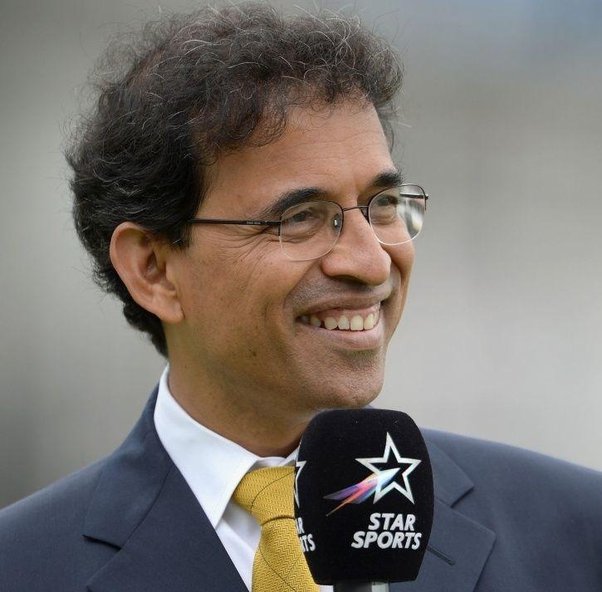
One cannot think of Indian cricket commentary without Harsha Bhogle (pictured below), who is often called the ‘Voice of Cricket’. His keen understanding of the game and insightful commentary made him stand out, and it’s no surprise that he has maintained his stature even 40 years after his debut. He’s equally skillful at after-match analyses, where he can dissect performances and identify reasons for losses and wins – every cricket enthusiast looks forward to his segment after the match is over. Also, he’s so well-read that he can connect patterns in cricket to other facets of life; it’s a joy to listen to him speak. But perhaps the most crucial aspect of his approach to commentary is his unbiased perspective: his focus is on skill, on sportsmanship, and while he’s a proud Indian, he doesn’t differentiate between a catch by Dhoni or a catch by Sarfaraz Khan. This is why he’s considered iconic, with his commentary transcending national boundaries. 

Many other famous commentators in India are accomplished former athletes. Perhaps the first name that comes to mind is Ravi Shastri, who blends his trademark humor with a clever analysis of the sport. The respect cricket fans have for him is immense, as he was a part of the 1983 world-cup winning team. He’s also extensively involved in cricket coaching, but enthusiasts look forward to any occasion where he makes his way to the commentating box. Similarly, we have Sunil Gavaskar, who brings a wealth of cricketing knowledge and a touch of nostalgia to his commentary. He always seems extremely invested in the game, almost commentating as a coach instead of an observer. In recent years, we’ve also been lucky enough to listen to Dada, or Sourav Ganguly, serve as commentator, along with Virender Sehwag. It can feel exciting to have celebrated players in the box since they provide anecdotes from older days and perspectives from the field as well!  

Sources:

https://www.moneycontrol.com/news/cricket/indian-cricket-on-radio-through-the-years-10812231.html

Blog 39 – The Rise of T20 Cricket: A Revolution in the Sport

Cricket, known for its rich tradition and history, witnessed a revolutionary shift in the early 21st century with the emergence of T20 cricket. This shorter format of the game has taken the cricketing world by storm, captivating fans across the globe and adding another dimension to the experience of the sport. 

The history of this format can be traced back to the UK: in 2003, the England and Wales Cricket Board needed a one-day match to replace the now-defunct Benson & Hedges Cup, and authorities were eager to invigorate domestic cricket and draw larger crowds to matches, especially youth. The Twenty20 Cup, as it was called, consisted of fast-paced, 20-over-per-side games designed to fit into a single evening. This new format was an instant success, attracting fans of all ages and backgrounds, including those who had never previously shown an interest in cricket.

Soon enough, it spread worldwide, with several tournaments in Australia in particular, and in 2007 the inaugural Twenty20 International cricket world championship was held in South Africa. India lifted this inaugural T20 world cup trophy with MS Dhoni as its new captain, that set the stage for the launch of the Indian Premier League (IPL) the very next year.

There have been a multitude of tournaments since then, with the Indian Premier League serving as the largest, and for many, this is the only format in which they consume the sport. 

It’s also changed the experience for players: the limited number of overs forces batsmen to go on the offensive from the very start, resulting in high-scoring and entertaining contests. For instance, it’s very common to see teams score 8 or 9 runs in an over – which would be the upper limit in an ODI, where saving wickets is a larger priority and risks less valuable! The introduction of the powerplay, where only a limited number of fielders are allowed outside the 30-yard circle in the first six overs, is another big change. 

Despite the overwhelming success and popularity of T20 cricket, it is not without its critics, particularly among cricket purists. Traditionalists argue that T20 cricket, with its emphasis on big hits and quick results, undermines the essence of the sport. They contend that it reduces the art of batting and bowling to a mere spectacle, favoring power-hitting over technique and strategy.  They’re also worried about the potential diminishing interest in Test cricket, the longest format of the game, which is known for its strategic depth and the mental and physical endurance it requires. 

The emergence of T20 cricket is undoubtedly an interesting development in the sport, whether one is a believer or a naysayer. It raises questions about the direction of the sport and what constitutes its essence. Is it important to maintain tradition or embrace innovation? How does one bring life back into a sport? Regardless of these larger philosophical questions, it remains true that 20-over matches aren’t going anywhere, and they will continue to have their own fanbase. 

Sources:

https://league11.in/blog/the-rise-of-t20-cricket/

Blog 38 – Clay vs. Grass vs. Hard Court: A Deep Dive into Tennis Surfaces

Tennis is perhaps one of the only sports with incredible diversity in their playing surfaces, and while many people don’t realize it, the court impacts the dynamics of the game to a great degree. From the red clay courts of Roland Garros to the pristine grass courts of Wimbledon and the rigid hard courts of the US Open, each surface presents its own set of challenges and advantages. Thus, it’s incredibly important for any tennis enthusiast, whether an avid fan or a budding player, to learn about these nuances – they’ll then have a better understanding of the interactions between the ball, player, and court. 

One of the most iconic and visually striking surfaces in tennis is the red clay court. The French Open is the only Grand Slam to be played on clay, and Rafael Nadal excels on this surface, for very interesting reasons. clay provides a slower playing surface that rewards players with strong baseline games and exceptional stamina. The surface absorbs more impact, resulting in higher bounces and a slower pace, since it gives players more time to react. It’s a well-loved surface because of the long rallies it supports and the clever strategy it requires – and also because they tend to be gentler on the player’s bodies! 

On the opposite end of the spectrum we have grass, the fastest of all three surfaces. It’s extremely slippery, which allows the ball time to gain speed. Grass provides an entirely different playing experience compared to clay or hard courts: along with the speed we also have the ball bouncing lower, making it conducive to serve-and-volley play and favoring players with powerful serves and net skills. The game becomes quite exciting for spectators, and a little bit unpredictable as well. Wimbledon, the oldest tennis tournament in the world, stands out for its lush green grass courts.

Lastly, tennis is also played on hard courts – which are, in fact, the most common surface in tennis facilities and training academies worldwide. Composed of acrylic, asphalt, or concrete with a thin layer of cushioning, hard courts offer a medium-paced playing surface that combines elements of both clay and grass. This makes it extremely versatile for a variety of training styles, and is also easier for beginners to adapt to. The only significant con is that the surface is extremely unforgiving for players: it’s made up of acrylic or asphalt with very little cushioning, so there’s a chance of injury. Today, many major tournaments like the US Open are played on a hard court, so they’re definitely here to stay. So, the next time you’re watching a tennis match, pay attention to the court and try to connect each athlete’s style to the ground they’re playing upon! 

Sources:

https://www.playfinder.com/blog/grass-clay-hard-tennis-courts

Blog 37 – Cricket in Fiction: The Impact of Cricket Literature and Films

Sports have long been acknowledged for their potency in bringing people and communities together, huddled around a television screen or screaming at a pitch, joined together in their love for the game. Cricket, especially in the Indian context, is one such sport that holds an extremely special place in the hearts of millions, enabling communities to come together and rejoice. Be it a cricket match or a film portraying the sport, it serves as a true inspiration for many. 

When thinking about cricket in literature, R.K. Narayan’s work immediately comes to mind. A childhood favorite novel, ‘Swami and Friends,’ set in a small town in Southern India during the end of the British Rule, is replete with instances of cricket. For instance, the protagonist, Swami, forms a cricket club with his friends, and the charm and simplicity of his days are told through his love for cricket and the first wicket he takes. Cricket is used as a metaphor for the simplicity and carefree childhood days of the children in that small town. Given that the sport originated in England, it’s only natural to speak of P.G. Wodehouse’s tales of cricket when thinking about cricket in literature. His fiction, too, was tailored for a youthful audience, and he published a trilogy of novels that were centered around cricket, including ‘Mike at Wrykyn’, ‘Mike and Psmith’, and ‘Psmith in the City.’ Named ahead of its time, the protagonist in ‘Mike at Wrykyn,’ Michael Jackson, was a phenomenal batsman with equally phenomenal cricketer brothers who underwent a series of cricketing trials while at boarding school. 

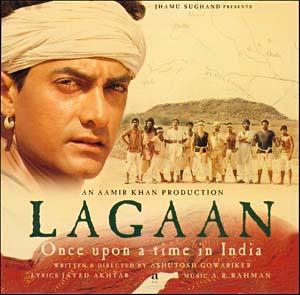
Cricket has also graced the silver screen numerous times, and especially in the world of Indian cinema, where it has been portrayed with great fervor and passion. Films like ‘Lagaan’ and ‘Dil Bole Hadippa!’ are fan favorites that have showcased the sport’s unifying power and its ability to transcend cultural boundaries. ‘Lagaan,’ in particular, not only delves into cricket but also addresses the themes of colonialism and social justice, making it a cultural phenomenon. Cricket also plays a pivotal role in shaping characters and narratives in Indian films. In the romantic film, ‘Kabhi Alvida Naa Kehna,’ a chance encounter during a cricket match leads to a series of events that challenge societal norms and relationships. Although cricket is not central to the theme of the film, it is used to push the storyline along, demonstrating the ubiquity of the sport in Indian cinema. 

Sources:

  1. https://www.thecricketmonthly.com/story/1070482/small-wonder
  2. https://fivebooks.com/best-books/indian-cricket-prashant-kidambi/
  3. https://www.thecricketmonthly.com/story/1116146/cricket-a-la-plum
  4. https://www.filmcompanion.in/features/20-years-lagaan-movie-netflix-aamir-khan-was-the-story-india-needed-to-rekindle-its-cricket-romance
  5. https://www.imdb.com/title/tt1202540/plotsummary/

https://transhindi.org/savita/node/410

Blog 36 – Tennis for All: Inclusive Initiatives and Adaptive Tennis

Diversity, equity and inclusion have become essential tenets in the modern world as we move towards a more fair and supportive society, where everybody has the opportunity to thrive and learn new things – and most importantly, have a voice at the table. The DEI principles have been a transformative force in many industries, from corporate governance to education, and sports isn’t far behind. Over 50 years ago, we saw the formation of the Women’s Tennis Association, which has hugely expanded women’s professional tennis – there are more than 70 tournaments across the world now! Thus, these initiatives to bring more people into the fold of athletics have been very successful in the world, and we have to remain hopeful that this will always remain the case. 

Community outreach programs play a pivotal role in making tennis accessible to a wider demographic. These initiatives often involve collaborations between tennis organizations, schools, and community centers to introduce the sport to individuals who may not have had the opportunity to play. This is especially important in the global south, where access to sports equipment becomes a luxury of the privileged, and underserved youth (some of whom might even have the potential to become incredible athletes!) lose out. A great way to achieve this has been by the integration of sports in school programs, where no one has to go out of the way to engage in athletic activities. Thus, addressing the class angle is a huge part of engendering inclusivity and nurturing a love for tennis at a grassroots level. 

The rise of adaptive tennis is another incredible shift. Essentially, this aims to modify certain aspects of the sport so everyone can participate, regardless of their age or abilities. Wheelchair tennis is one such modification for those with mobility issues, but there are others as well, such as shortening the court length, making the ball bigger, or allowing for a two-bounce rule. These help people struggling with disabilities like cerebral palsy, multiple sclerosis, muscular dystrophy, limb differences, arthritis, and even those with traumatic brain injuries play tennis. Visually impaired lawn tennis (also called sound tennis) has become another popular sport, involving audible tennis balls so players can hear them, tactile lines on the court, and a lower net. 

Several high-profile tournaments and events have embraced the ethos of inclusivity: the US Open, for instance, has incorporated wheelchair tennis events alongside its traditional competitions. And of course, we have the Paralympics as well! Looking ahead, the tennis community must continue to champion inclusivity through sustained efforts in these spheres, helping more and more individuals showcase their skill and athleticism in tennis. 

Sources:

https://www.sralab.org/adaptive-tennis

https://wearecollegetennis.com/diversity-equity-and-inclusion

https://www.lta.org.uk/play/inclusion-disability/visually-impaired-tennis

https://fortune.com/2023/08/03/tennis-courts-corporate-governance-diversity-equity-inclusion-billie-jean-king-aniela-unguresan

Blog 35 – Tennis’ Golden Age: The Era of Sampras, Agassi, and Graf

What constitutes the Golden Age of tennis? Each fan would likely have a different answer. For many, especially younger enthusiasts, the Big Three represent tennis at its peak – the trio of  Novak Djokovic, Roger Federer and Rafael Nadal, each considered an incredible player in their own right. They’ve dominated tennis for over two decades, breaking records left and right and setting new standards for athletic prowess. So it wouldn’t be wrong to say that tennis is still enjoying an amazing run with brilliant players. But for those a little older, the Golden Age harks back to a different time… where there was fierce rivalry but a dawn of new styles, where tennis gained a new avatar and unparalleled popularity  across the world. So who laid the runway on which today’s players can thrive? We’re thinking of three athletes the world will never forget: Sampras, Agassi, and Graf. 

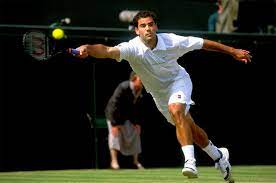
Known for his powerful and precise serve-and-volley game, Sampras became a dominant force in the early 90s,  amassing an incredible 14 Grand Slam singles titles during his career, a record that stood until surpassed by Roger Federer in the subsequent years. At one point, he was the No. 1 tennis player in the world! His rivalry with Andre Agassi is absolutely legendary – many call it the greatest rivalry tennis has ever seen. This is because they weren’t simply clashing on athletic skill and prowess, or who had more tournament wins to their name. There was a fundamental difference in their personalities and playing styles that captivated every viewer. Sampras, with his powerful serve-and-volley game, represented the classical, elegant approach to the sport. Agassi, on the other hand, was the charismatic baseline maverick, relying on his agility, relentless groundstrokes, and return of serve to dictate play from the back of the court. It was a constant tug of war, and a delightful spectacle to witness. Although Sampras ended up with more wins to his name (20 to Agassi’s 14), Agassi remains one of the greatest players of tennis, achieving a career Grand Slam and many other records, and more importantly, launching the sport to the stars. There’s no other endorsement of tennis than his brilliant persona!

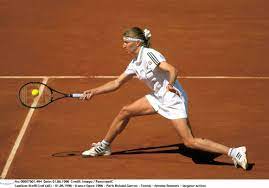
In the women’s game, Steffi Graf stood head and shoulders above her competition during the Golden Age. She became well-known for her graceful movement, powerful forehand, and relentless competitiveness, securing an astounding 22 Grand Slam singles titles, including a Golden Slam in 1988, where she won all four major titles and the Olympic gold medal in a single calendar year. Her achievements however extend beyond the court: not only was she a brilliant sportsperson, she also inspired a whole generation of women to follow their dreams and pursue athletic excellence. The era of Sampras, Agassi, and Graf not only produced unforgettable matches and rivalries but also left an indelible mark on the sport. They had an incredible global influence and helped set the stage for the incredible players we continue to see in the 21st century.      

Sources:

  1. https://www.latimes.com/archives/la-xpm-1999-jul-04-sp-52970-story.html

2. https://www.tennisfame.com/hall-of-famers/inductees/stefanie-graf

3. https://www.sportskeeda.com/tennis/sampras-agassi-1990s-unfiltered