Blog 14 – See You in Court: The Biggest Scoring Disputes in Tennis

Even in professional games with umpires and technology, the score can occasionally be off. Famously, no one noticed when the umpire awarded Karolina Sprem an extra point in a tiebreak during Venus Williams and Karolina Sprem’s match at Wimbledon in 2004. Williams ultimately lost the game. Even more difficult situations arise in unrefereed games, where it is up to the players to ensure accuracy and resolve any problems.

Calling out scores clearly before the start of each point as well as each game is the best approach to prevent scoring disagreements. If there is a disagreement over who won a point or game, the players must go back to that point or game and continue the game from there. However, when stakes are high, as they usually are in competitive games, things get ugly in case of tennis score-keeping where riffs can range from verbal to even physical fights. Here are some of the examples which show the extent of such altercations: 

Rafael Nadal: 

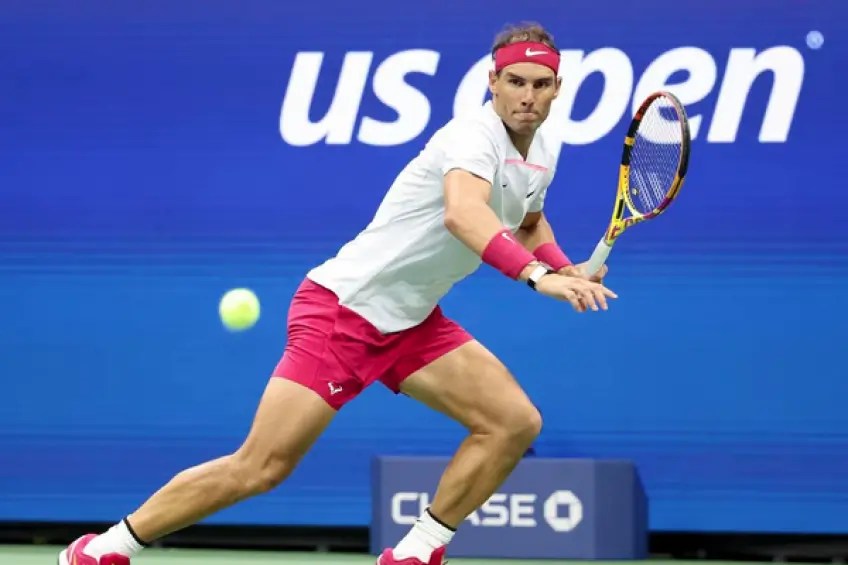
The fact that Thomas Berdych and Rafael Nadal have some tennis court history added intrigue to this match even before it began. But when the umpire rendered contentious decisions, the situation erupted. It appeared as though Berdych was about to lose his cool and spit the dummy out after a very late overrule from the chair, but he instead chose to contest the call. The umpire decided to award Berdych the point rather than ordering a replay as Hawk-Eye revealed that the ball was in (by a few millimeters). Not only had he stopped playing, but he had also put the ball back on the court. Nadal did not appreciate this at all. Only if Berdych’s shot was determined to be non-returnable should he have been given the point. It is challenging to assert that a ball is non-returnable when it has already been returned!
Serena Williams: 

Serena Williams has a strong personality and will not tolerate ridicule, despite the fact that she enjoys doing so. Serena was feeling emotional during the 2011 U.S. Open final. She made a stunning comeback to the game in time for the Flushing Meadows event after missing a year due to an injury and health issues. After winning the match and facing Sam Stosur in the final, Serena swiftly lost the match. Serena quickly celebrated a strong forehand winner when she faced yet another breakpoint. She was hasty in her celebrations, which was a concern. 

Things rapidly went south when she learned that Stosur had won the point as a result of the early celebration.

John McEnroe:

This eruption at Wimbledon in 1981 will go down in history as one of the greatest on-court fights ever, immortalized by Hugh Laurie in British comedy skits. Even for McEnroe, the altercation wasn’t particularly rough or harsh; rather, it was his open disrespect for the umpire that startled the Wimbledon crowd.

Jimmy Conors: 

Throughout his playing career, Jimmy Connors was always a colourful character, but on the day of his 39th birthday at Flushing Meadows, tensions were particularly high. The elderly Connors knew he needed things to go his way if he was to win against the young Aaron Krickstein, who was only 24 years old. The issue is that not everything went his way; in a first-set tiebreaker, the chair umpire overturned a call that arguably shouldn’t have been overturned. Then it began. The five-time U.S. Open winner Connors unleashed a barrage of vulgar insults at the umpire to express his frustration. 
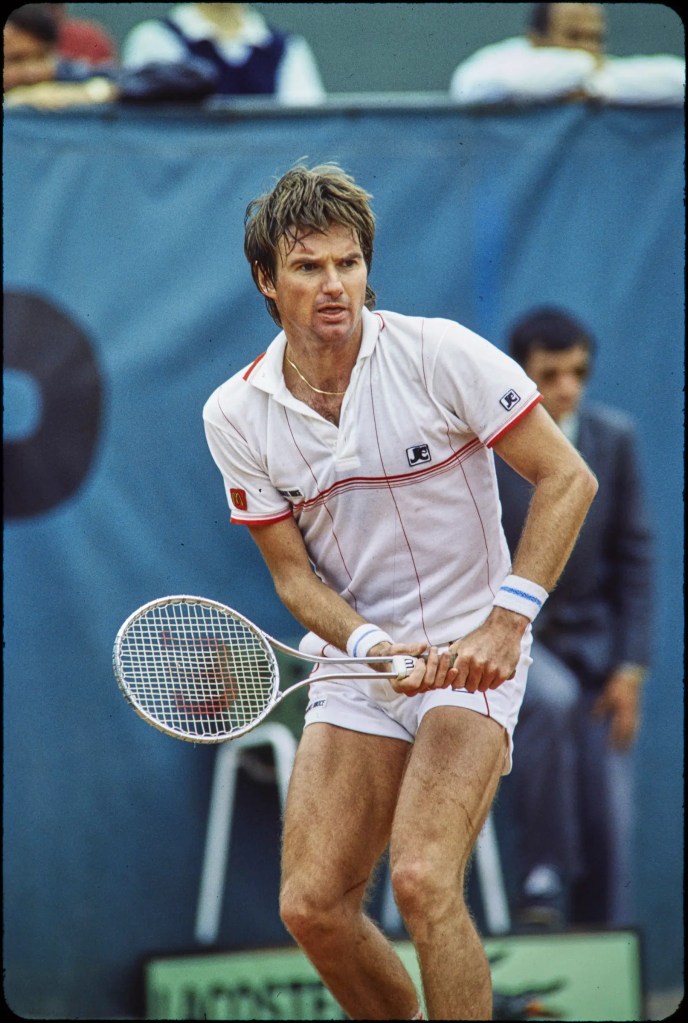
Jeff Tarango: 

The American abruptly terminated his tournament in 1995 at the All-England Club by storming off the court mid-match. Things got out of hand after a disputed call and Tarango insisted on speaking to the umpire supervisor, who was unable to defuse the situation. Tarango had had enough and exited the court after being given a code violation for alleging that umpire Bruno Rebeuh was corrupt. Mr. Tarango never spoke to Mr. Rebeuh again, but his wife waited outside the restroom and slapped him when he came out.

Sources: 
  1. https://bleacherreport.com/articles/908424-13-nastiest-on-court-spats-in-tennis-history-video
  2. https://www.shopdoubletake.com/blogs/well-played/scoring-disputes
  3. https://www.ultimatetennis.com/support_pages/singles-scoring-conflicts

Blog 13 – Early to the Ball: Inspiring Tennis Teens

Every once in a while, there comes about a young personality in the world of sports which sways everyone off their feet. What is perhaps most spectacular about such an instance is that people as young as these prodigies and as brilliant as them at their sport spark a sense of wonder among the audiences around the world. 

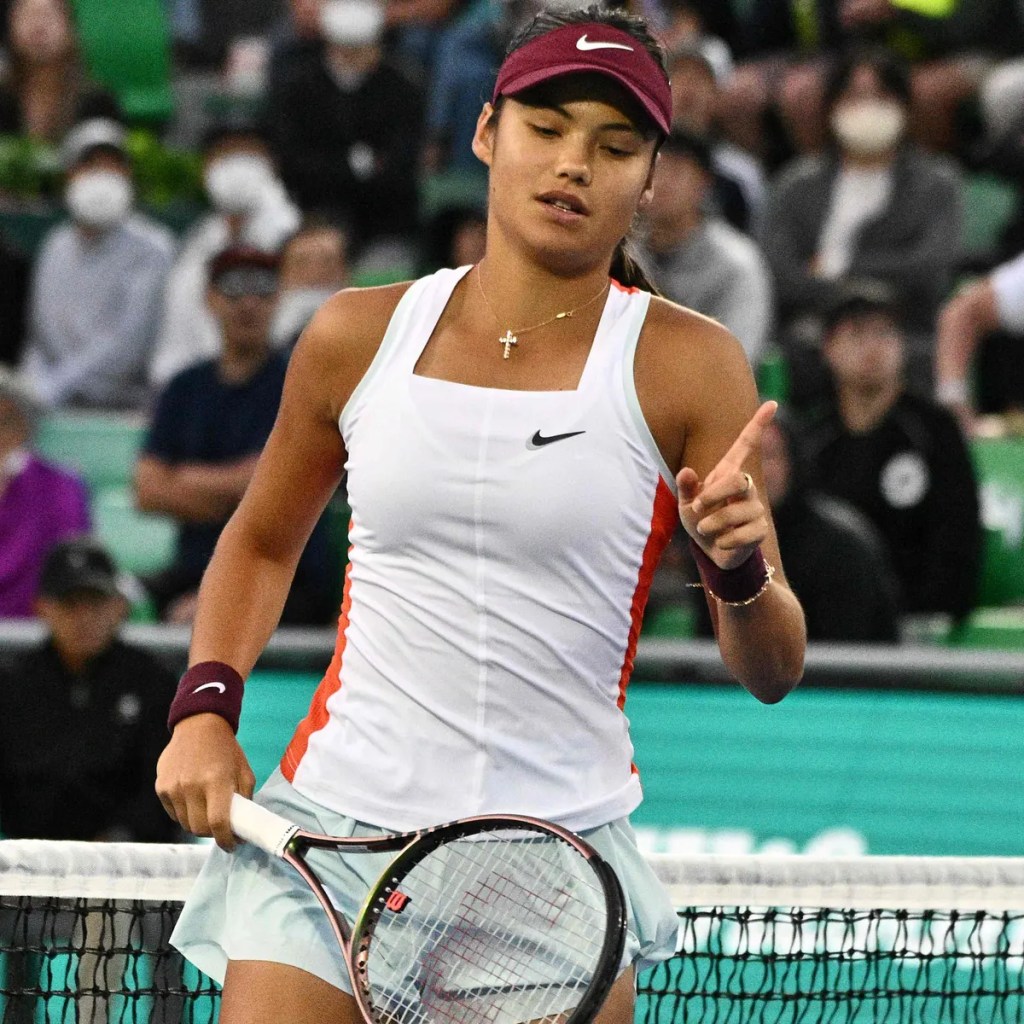
Many people’s lives are made so much happier and more inspiring by sports. And it’s a blessing when a terrific young talent’s competitive spirit captures the hearts of millions. Before August 2021, 18-year-old Emma Raducanu had never heard of her; today, however, she is the new sporting world sensation. The world witnessed something unprecedented in tennis history with British teenager Emma Raducanu’s stunning victory at the US Open.

Emma Raducanu

For the first time in the Grand Slam Open Era, Emma Raducanu advanced from the qualifying round to the championship match by defeating Canadian Leylah Fernandez, 19, another up-and-coming player.

In a yet another example of leaping borders through the power of sport, Nadal expressed his excitement to meet Meshkatolzahra and described her story as “wonderful” in a voicemail to The National. The 17-year-old Meshkatolzahra Safi is the first Iranian tennis player to compete in a Grand Slam tournament and win a match there. According to The National, Safi ran into her hero in the Australian Open’s hallway and shared a snapshot of the two of them on Instagram.

In the case of Coco Gauff, who the world looks up to for their brilliance in the sport of tennis, the star themself have admitted to being inspired by Serena Williams. This exhibits a sense of humility which no sportspersons worth their salt can do without. Williams’ dominance in the sport has endured for a considerable amount of time, as seen by her first Grand Slam victory at the 1999 US Open and her most recent at the 2017 Australian Open, as well as appearances in the US Open and Wimbledon finals in 2018 and 2019.

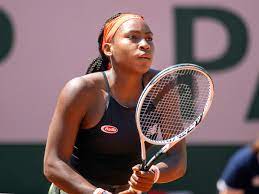
Coco Gauff

And then there is the story of Prajnesh Guneshwaran: With encouragement and support from his grandparents, Prajnesh began playing tennis at the age of eight. He went on to win titles in every age division, including Under 12, Under 14, Under 16, and Under 18. won the Boys (Under 18) and Men’s Runner-Up National Titles on the same day while competing in two competitions in one week!

Sources: 

  1. https://en.irna.ir/news/84627464/Nadal-says-very-proud-of-inspiring-Iran-teenage-tennis-player
  2. https://sports.ndtv.com/tennis/reason-why-i-play-tennis-teen-stars-hail-serena-williams-as-inspirational-game-changer-3241804
  3. https://www.bharatarmy.com/stories/Tennis/Emma-Raducanu-The-Teen-inspiring-millions
  4. https://thebridge.in/featured/prajnesh-gunneswaran-the-inspiring-story-of-a-tennis-player-once-written-off-for-good/?infinitescroll=1

Blog 12 – Keeping Score: The Evolution of the Tennis Scoring System 

All sports have specialized vocabulary that they use to express the nuances of the regulations and the flow of play. However, the grading is typically at least predictable and easy to understand. With tennis, however, the case is different.

For those who are new, tennis begins with both players at 0, or “love-all.” Score for one person: 15 for love. The server’s score is announced first, followed by the receiver’s. They are now tied at “15-all” after the other scores. The following point scores the game-winning goal at 30, then 40. A deuce is called if they tie after 40 points. From there, the next player to score has the advantage. However, in most cases, to win the game, the player must score twice in a row and win by a margin of two points. And that’s not the end of it. A set is made up of six of these games, and a set must be won by two games in order to avoid a tiebreaker. 

It then repeats after the set is over. Depending on the event, winning the best of five sets or the best of three sets is required to win the entire match. 

This system of scoring is often considered to be peculiar and odd and fans have often wondered about the need for keeping such a quirky system of scoring. Not to disappoint the fans and the curious reader, pretty much every part of this system is a mystery, leaving people to speculate what started where. 

According to Elizabeth Wilson, a writer, “there are many theories, and numerous romantic conceptions have been developed concerning it. Tennis has a lot of history that isn’t really history; it’s more legend than actual history, which is in part what turns tennis into a sort of romantic game. Some of the theories as to how it got started are rather fantastical.”

The tennis scoring system has remained consistent since the Victorian era, despite its intricacy. The origins of the contemporary game of tennis can be found in the 12th century French game known as jeu de paume. In the beginning, the palm of the hand was used to play; by the sixteenth century, rackets had been introduced. Wilson claims that tennis was highly stylized from the start because of its close ties to the pageant traditions of the French court.

Records of scoring systems similar to the ones used today stretch back practically to the start of the sport, however throughout these years, the scoring was done with increments of 15, 30, and 45 points, which at least makes more sense mathematically than the current system. Several years after the Battle of Agincourt in 1415, a poem was composed that counts up the points—15, 30, and 45—in a tennis match between English King Henry V and the French Dauphin.

There are several theories as to where the English word tennis came from, although it undoubtedly appeared in the 15th century.) For instance, Jan van den Berghe raised concerns about how players could score fifteen points with a single stroke in the 1520s. The fact that they count or award more than one point for a single stroke is, after all, a little odd. Why aren’t one and two points awarded for a single and double stroke, respectively? 

The history of scoring systems in other games, sophisticated multiplication, measurements of the separations between lines of demarcation on early courts, and other factors have all been used in numerous ideas throughout the years, but no conclusive solution could be established.

Sources: 

  1. https://thetennisbros.com/tennis-tips/rules/why-is-tennis-scored-the-way-it-is/
  2. https://www.sportingnews.com/us/tennis/news/tennis-scoring-explained-rules-system-points-terms/7uzp2evdhbd11obdd59p3p1cx
  3. https://www.theguardian.com/notesandqueries/query/0,5753,-20405,00.html
  4. https://improves.co/tennis-scoring-system/

Blog 11 – In and Out: How Injuries Finished Tennis Careers

Professional athletes in most sports are good as their bodies and minds are. When a sportsman enters a field, they are very well aware of the risks of injury that come along with playing a high endurance sport and in fact a large part of their training is done to make sure they avoid as much injury as possible by getting better at their craft. However, in the pursuit of this perfection, one may overstrain their bodies which may lead to fatigue and injury.

Once in the field, the player has to give their best in a limited amount of time. They try to move faster than ever, run faster than ever, and perform in a way that presents the most optimum version of themselves. In such a high stakes environment, injuries are inevitable, sometimes ending entire sports careers. 

When it comes to tennis, the case is no different. Tennis is as fiercely competitive as it is at times. Particularly for players who have had to deal with unwelcome and unfortunate injuries as well as other health issues. Many of these names, some of whom were at their height, have appeared throughout the history of the sport and have either been forced to retire early or, worse still, have been unable to return to the same level of greatness before suffering from injuries and ill health.

Here are some names in the world of tennis who had to give up their careers as a result of serious injuries: 

  1. Lleyton Hewitt

Lleyton Hewitt, then 20 years old, broke the record for the youngest player to hold the top rank in 2001 after winning his first major tournament. The Australian had an excellent year in 2002, winning his second major at Wimbledon and finishing the year as the top-ranked player for the second year in a row. Since then, Hewitt has had nothing but bad luck, with frequent operations and injuries interrupting his career. 

  1. Kim Clijsters 

The WTA ranked Kim Clijsters No. 1 for the first time ever without her having claimed a grand slam victory. She accomplished this accomplishment in 2003, the same year that she won the women’s doubles division at both the French Open and Wimbledon, making her the No. 1 doubles player in the world. The Belgian tennis pro won the 2005 US Open, her first grand slam victory. As she continued to improve, Kim Clijsters won the 2006 Australian Open by defeating Martina Hingis in the quarterfinals before withdrawing from the competition due to an ankle injury.

  1. Martina Hingis

When Martina Hingis and Helena Sukova won the women’s doubles Wimbledon championship at the age of just 15 years and 9 months, they set a new record for the youngest Grand Slam champion. When she won the 1997 Australian Open at the age of just 16 years and 3 months, she also set a record for the 20th century’s youngest singles Grand Slam winner. 

Hingis (winner of seven singles Grand Slam titles and nine doubles Grand Slam titles) made the decision to end her career at the age of 22 following a number of accidents and operations at the beginning of the twenty-first century.

  1. Justine Henin

When Justine Henin contributed to Belgium’s Federation Cup victory in 2001, she became well-known worldwide. She won the US Open and French Open in 2003, and in 2004 she also prevailed in the Australian Open. At the 2004 Summer Olympics in Athens, the Belgian won the women’s singles gold medal. 

In 2008, she fractured her right kneecap and later withdrew from a competition, citing exhaustion as the cause. The tennis world was shocked when Henin, the then-World No. 1, abruptly announced her retirement just before the 2008 French Open.

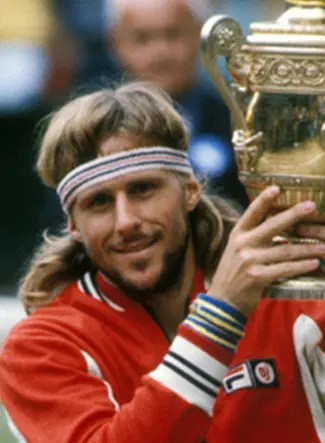
  1. Bjorn Borg

At the age of 25, the Swedish player won five straight Wimbledon titles in addition to six French Open crowns. 

The young wonder won the French Open in 1974 and maintained the title the following year, giving him his maiden grand slam at the age of just 18. The 1981 World No. 1 lost to John McEnroe in the Wimbledon and US Open finals following his sixth French Open victory. Borg was shocked by his loss in the 1981 US Open final and claimed it was the first time in his life that he didn’t feel sad.

Sources: 

  1. https://www.tennisworldusa.org/other_news/golf/118986/paul-barjon-three-events-to-save-right-to-play/
  2. https://www.gamblingsites.com/blog/5-most-common-injuries-tennis-players/

Blog 10 – The Last Shot: Highlights of the 2021 Tennis Season

The tennis competition at Wimbledon in 2021 got underway on June 28 and ended on July 11. In the singles game of the Wimbledon 2021 competition, 128 participants took part. However, additional games were also played, such as mixed doubles, women’s doubles, and men’s doubles.

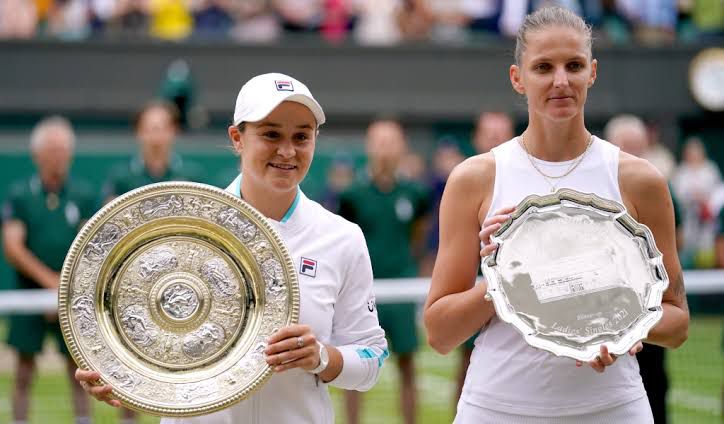
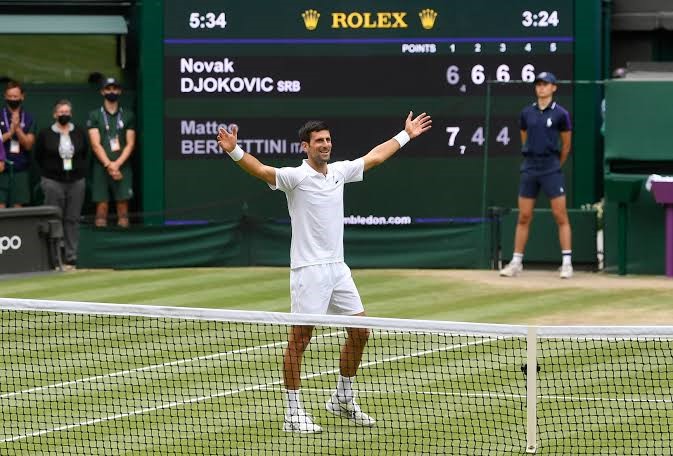
The Wimbledon men’s final was played on July 11th, and Novak Djokovic defeated Matteo Berrettini of Italy with scores of 6-7(4), 6-4, 6-4, and 6-3! On July 10, Karolina Pliskova and Ashleigh Barty faced off in the women’s singles final. Ash Barty became the first Australian woman to win the Wimbledon singles when she defeated Karolina Pliskova with scores of 6-3, 6-7(4), and 6-3.

Highlights of the game (Men): 

Quarterfinal 

Roger Federer and Novak Djokovic, the top seeds, advanced to the second round after defeating A Mannarinho and J. Draper. In addition, Murray made a remarkable comeback with a decisive victory.

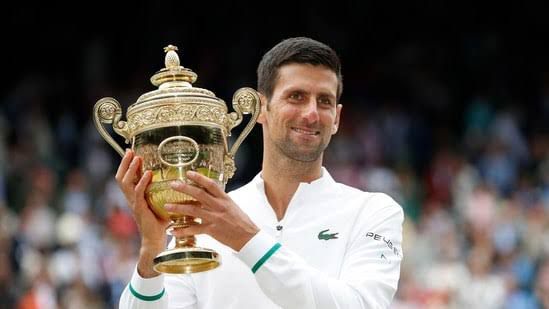
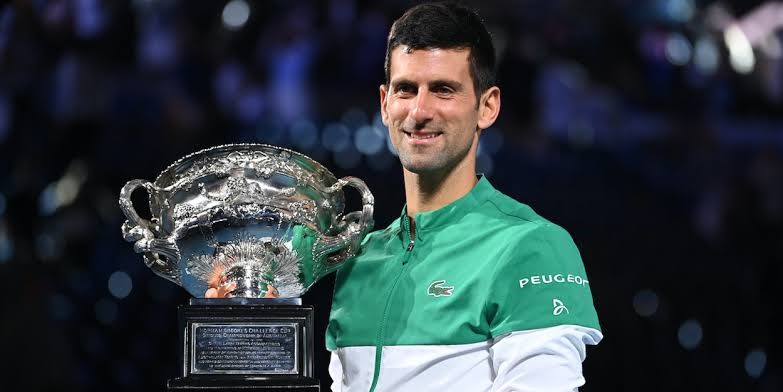
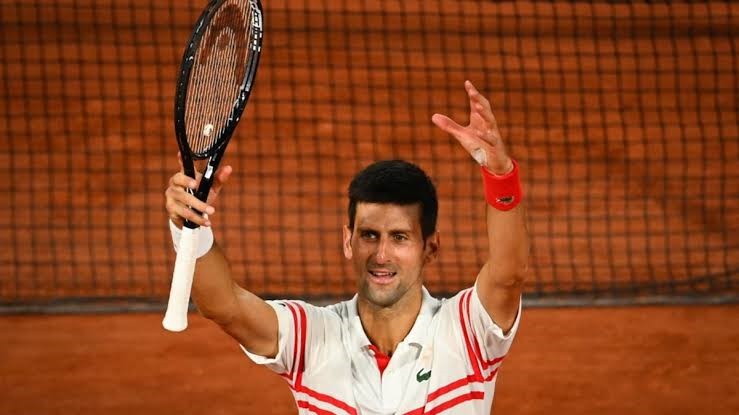
2021 Wimbledon champion Novak Djokovic

Semi-final 

Denis Shapovalov defeated Karen Khachanov with a score of 4-6, 6-3, 7-5, 1-6, 4-6, while Novak Djokovic defeated Marton Fuscovics by a score of 6-4, 6-4, 6-4 in the quarterfinal round. Both won a spot in the semifinals. On the other side, Hubert Hurkacz defeated Roger Federer by 3-6, 6(4)-7(7), 0-6 and played with Hubert Hurkacz in the Semifinals. Félix Auger-Aliassime was defeated by Matteo Berrettini by 6-3, 5-7, 7-5, 6-3.

Final 

Both Novak Djokovic and Matteo Berrettini advanced to the last round after defeating Canadian professional Denis Shapovalov and Polish professional Hubert Hurkacz in sets that ended in 7(3)-6(3), 7-5, 7-5 and 6-3, 6-0, 6(3)-7(3), 6-4, respectively.

Matteo Berrettini was defeated in the championship match by Novak Djokovic 6-7(4), 6-4, 6-4, 6-3! and triumphed in the Wimbledon 2021 Men’s Singles final. The championship’s runner-up was Matteo Berrettini.

Highlights of the game (Women):

Tennis players from a variety of well-known women’s tennis teams competed in Wimbledon in 2021. Here are the highlights from women’s games: 

Quarterfinal 

Ashleigh Barty (AUS) defeats Ajia Tomljanovic (AUS) with a score of 6-1, 6-3 in the quarterfinal round. However, Angelique Kerber advanced to the semifinals after defeating Karolina Muchova (Cze) 6-3, 6-3. Karolina Pliskova (Cze) also advanced to the semifinals after defeating Viktorija Golubic (Swi) 6-2, 6-3. Aryna Sabalenka (Blr) also through to the semifinal round with sets scores of 6-4, 6-3.

Semi Final 

Ashleigh Barty defeated Angelique Kerber by scores of 6-3, 7-6, and 7-3 in the first semifinal match. Karolina Pliskova advanced to the championship round by defeating Aryna Sabalenka (5-7, 6-4, 6-4) in the second semifinal match.

Final

On July 10, 2021, Ashleigh Barty and Karolina Pliskova squared off in the championship match. Ashleigh Barty won the 2021 Wimbledon women’s championship after defeating Karolina Pliskova 6-4, 6-7 (7-4), and 6-3.

2021 Wimbledon champion Ash Barty and runners-up Karolina Pliskova

Source:

https://selectra.in/blog/sports/tennis/watch-wimbledon-schedule

ReplyForward

Blog 9 – US NBA 2021-22 Finals Playoffs: The Golden State Warriors Triumphs

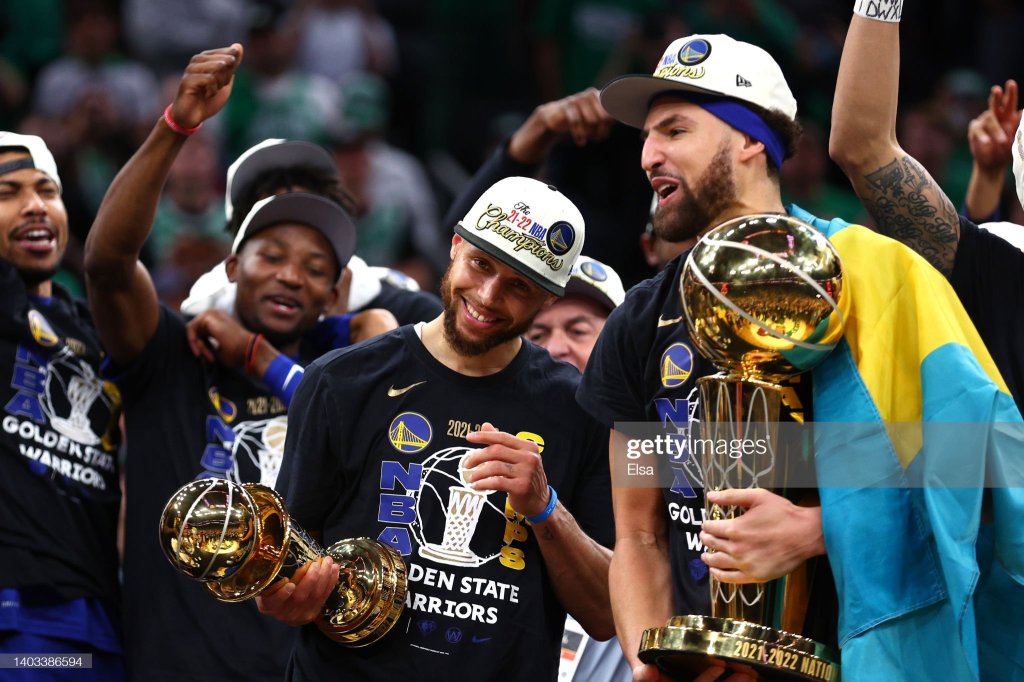
BOSTON – JUNE 16: Stephen Curry #30 and Klay Thompson #11 of the Golden State Warriors celebrate after defeating the Boston Celtics 103-90 in Game Six of the 2022 NBA Finals.

I arrived in California (San Francisco) from New Delhi in the afternoon of 2nd June, 2022 and that very evening was the first of the “best of seven” NBA finals between the Golden State Warriors (San Francisco) and the Boston Celtics. Over the next fortnight, I had a blast watching each of the six finals that ensued where the Golden State Warriors prevailed 4-2 to lift the trophy for the fourth time in seven years! Here is how the cookie crumbled and the salient highlights:

  1. First time finals most valuable player (MVP) Steph Curry lighted up the finals, proved himself as the greatest shooter of all time and won his 4th NBA title.
  2. Wiggins and Poole came together to form a lethal pair, defensively and on the offensive end too.
  3. Draymond Green was off color for the first 4 games, was even at the center of the Celtics’ fans wrath, but came back strongly and showed his prowess, especially in game 6, to get himself his 4th NBA ring.
  4. Celtics squandered away their 2-1 lead after three games with too many turnovers, especially Tatum, who gave away nearly 100 turnovers over the span of the playoffs.
  5. Tatum failed to fire in attack, missed many easy layups to gift game 3 to Golden State Warriors even after having the lead 5 minutes into the 4th quarter, the real disappointment throughout the series for Boston.
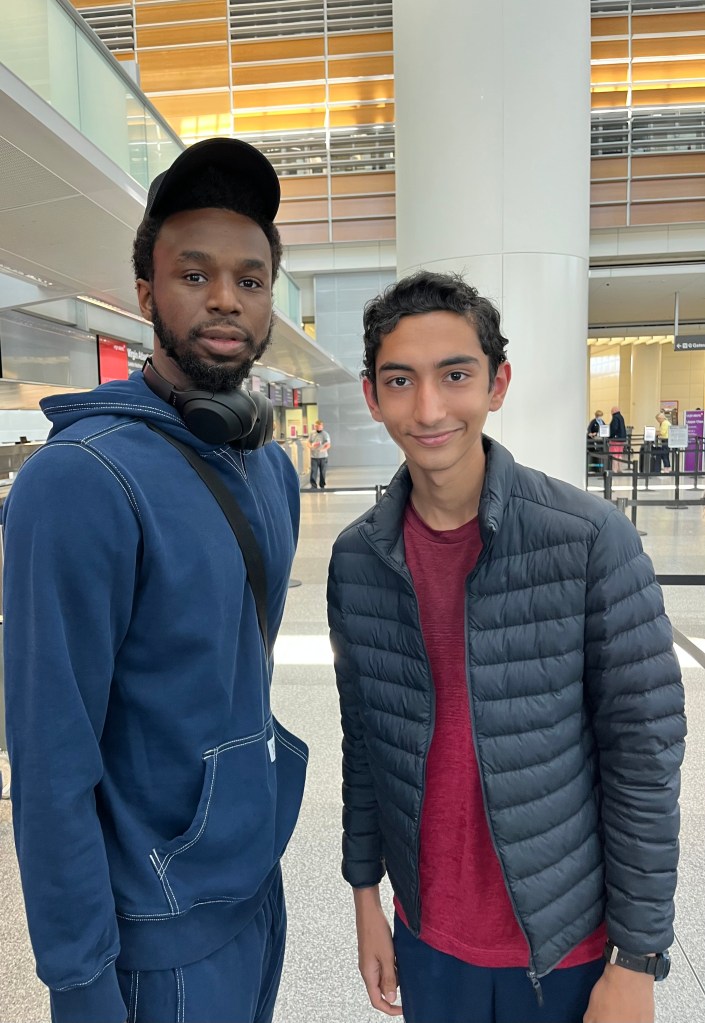
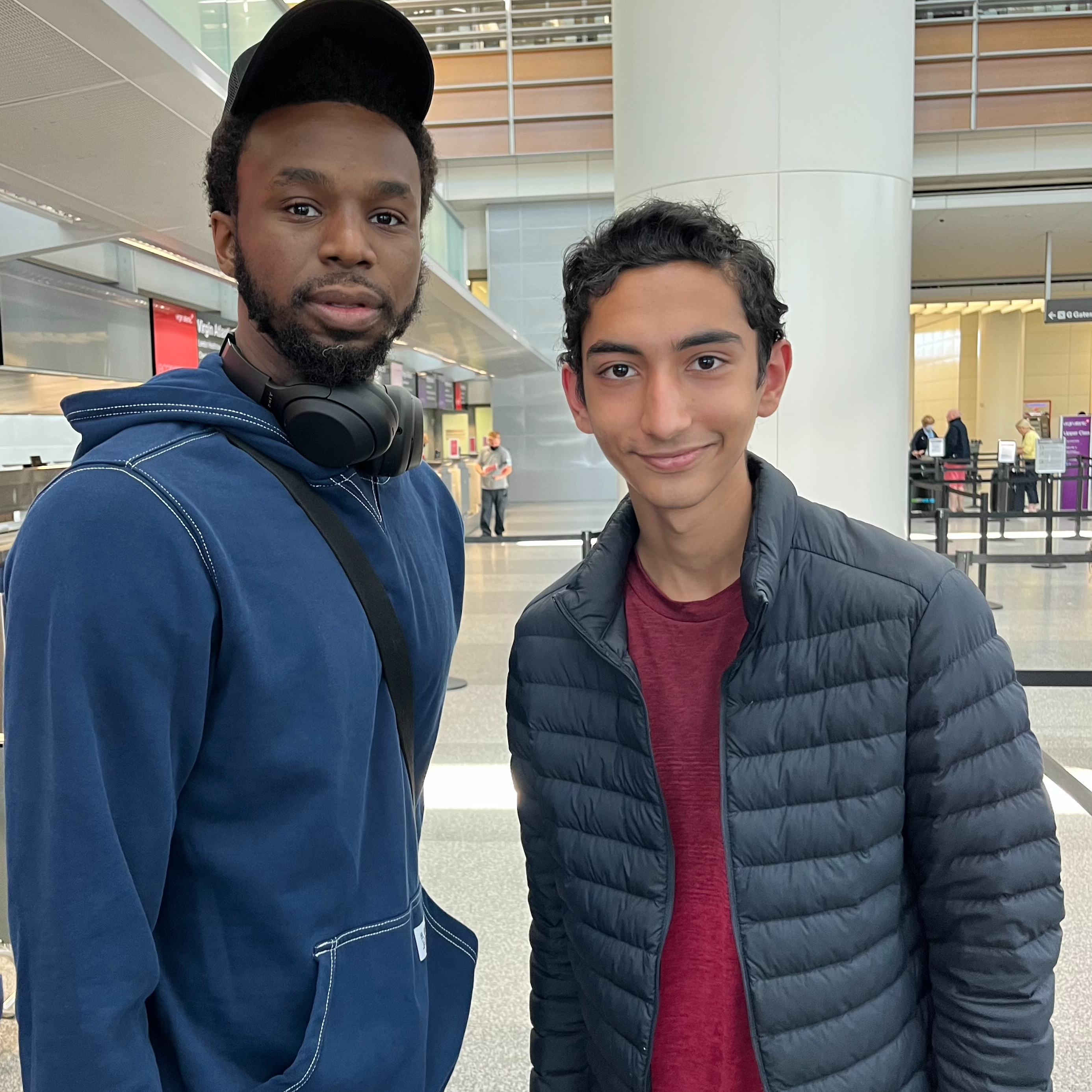
  6. Wiggins (I was fortunate to get clicked along side him!) got the rebounds in games 4 and 5, what the Warriors lacked in the first 3 games. He was by far the best player on the court in game 5, notching up 26 points, a rare day when Steph Curry failed to shoot a single three pointer for the first time in a game since November 2018.
  7. Warriors’ defense quality got bolstered since game 4, with them hardly missing any defensive rebounds.
  8. Klay’s importance in the unit once again proved undeniable, as he fired in the right moments. He has made his presence felt in the team since his return to the court after a gruesome injury. He went from being unable to walk three years ago, to now wearing his 4th NBA ring.
  9. Gary Payton II and Jordan Poole chipped in on the offensive side well throughout the playoffs.
  10. This Warriors team isn’t the most talented, yet this year’s title is probably the most unlikely and hence title the most special one, as it came after a tough couple of years for the franchise.
SAN FRANCISCO – June 24: Andrew Wiggins and Kunaal Dhawan

Boston Celtics had several positives to take them forward – Jaylem Brown was consistent for most of the series, and Horford was better offensively in game 6, driving in more often. Robert Williams II was quite good with the blocks as he made 7 straight threes in game 5 in the 3rd, with everyone chipping in!

Over to the next season in a few months!

Blog 8 – Novak Djokovic’s 2021: The unimaginable feat that could’ve been

Novak Djokovic has been my idol for long. When he says, “pressure is privilege, and it drives me to perform”, I get in awe of him. He inspires me on how never, ever give up. If it’s a grand slam final and he is 0-2 down, I would put all my money on Novak to still turn the match around and come out victorious. Such is his methodical preparation, focus on process, and ability to take on severest of pressure.

In 2021, he had an excellent opportunity to make the unimaginable happen – to win all the four major grand slams in a calendar year, a feat achieved by Sir Rod Laver of Australia way back in 1969. Alas, it was not to be! Novak won the first three grand slams and came to the finals of the US Open, and then lost to Medvedev. This is how the cookie crumbled, so here are the salient highlights from the 2021 season for Djokovic.

Australian Open

  • In full control till the 3rd round, in which he had a muscle tear, but still beat next-gen star Taylor Fritz in 5 sets
  • Beat superpower Alexander Zverev in the quarters
  • Defeated Aslan Karatsev in the semis, who was competing in his 1st slam
  • Defeated Medvedev in the finals in straight sets to lift his 18th grand slam title (this opponent will come back in the story!)

Roland Garros

  • Dominated the first 3 rounds
  • Faced a stiff challenge against youngster Lorenzo Mussetti, who took him to 5 sets but Djokovic did well to pass the test
  • Beat the energetic Berrettini in the quarters to set up a blockbuster clash with “The King Of Clay” Rafael Nadal
  • Nadal was expected to dominate Djokovic and win a record 21st grand slam title. He didn’t concede even a single game to the world no.1 for the first 5 games, but Djokovic fought back, even though he lost the first set 6-3, he ignited a feeling of hope in himself and his fans. The determined Djokovic beat Nadal in 4 sets to set up a title clash with Stefanos Tsitsipas
  • Although Tsitsipas won the first 2 sets, he looked out of sorts after those sets as Djokovic pounced on him to add to his glittering grand slam tally, making it 19. By lifting his 2nd Roland Garros title, he became the only male to win every grand slam twice.

Wimbledon

  • Stepped into the illustrious Centre Court as the favourite right from the 1st round
  • His improved serve was the main focus as he kept hammering aces down the tee. He marched into the semis with little to no problems, dropping just one set in the process
  • With the Swiss maestro Roger Federer falling to Hubert Hurkacz in the quarters, and Rafael Nadal not competing in the tournament, the path looked clear for Djokovic
  • He thrashed Denis Shapovalov in the semis, but the Canadian put up a valiant effort. Djokovic booked his place in the final with Matteo Berrettini
  • Berrettini won the first set in the summit clash, with the first set going to a tiebreak. Djokovic bounced back and sealed the deal, winning his 20th grand slam title, matching Nadal and Federer’s tally.

US Open

  • Came into the tournament after failing to register a medal for his country in the Olympics.
  • Played well till the quarters, faced a challenge in the quarters from Berrettini, but defeated him in a similar fashion to the previous 2 grand slams.
  • Had lost to Zverev in the semis of the Olympics, who then went on to become the Olympics Champion. Djokovic overcame that heartbreaking loss to defeat Zverev in a tiring, physical five-setter to set up a final with Daniil Medvedev
  • Djokovic walked into the majestic Arthur Ashe Stadium with 17 hours of playing time in the tournament behind him, while Medvedev had competed for 11 hours. Djokovic never really looked in control and eventually lost in straight sets. The loss took an emotional toll on him, as he received the runners-up trophy in tears, yet got a standing ovation from the New York fans. Djokovic missed out on completing a calendar slam, which could’ve been the first since 1969 when Rod Laver achieved the feat. He also had the opportunity to race ahead in the total grand slam tally. It is to be seen what the future holds for one of the greatest of all time!

Blog 7 – India vs. Australia “Bubble Cricket” Test Series (December 2020 – January 2021)

One of the first few test series between any two nations to get going after the nearly 9-month Covid lockdown, this Border-Gavaskar trophy series in late 2020 is surely living up to the expectations that had built up, if the first two tests are anything to go by.

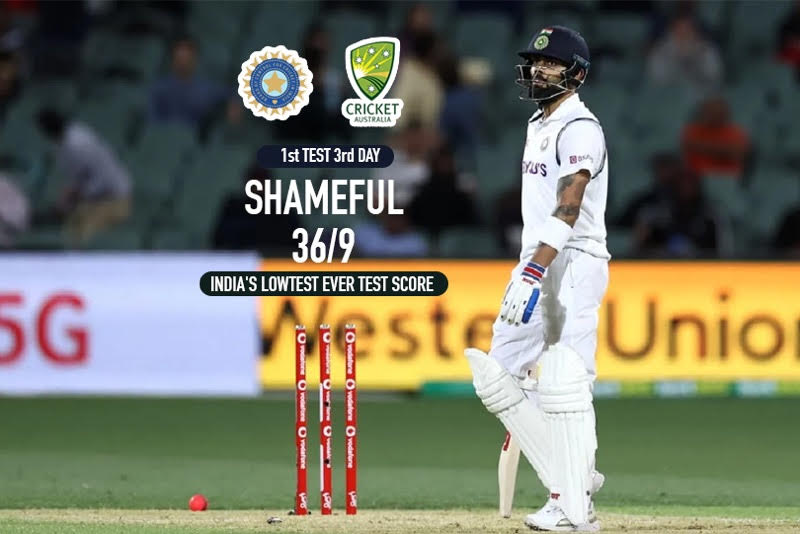
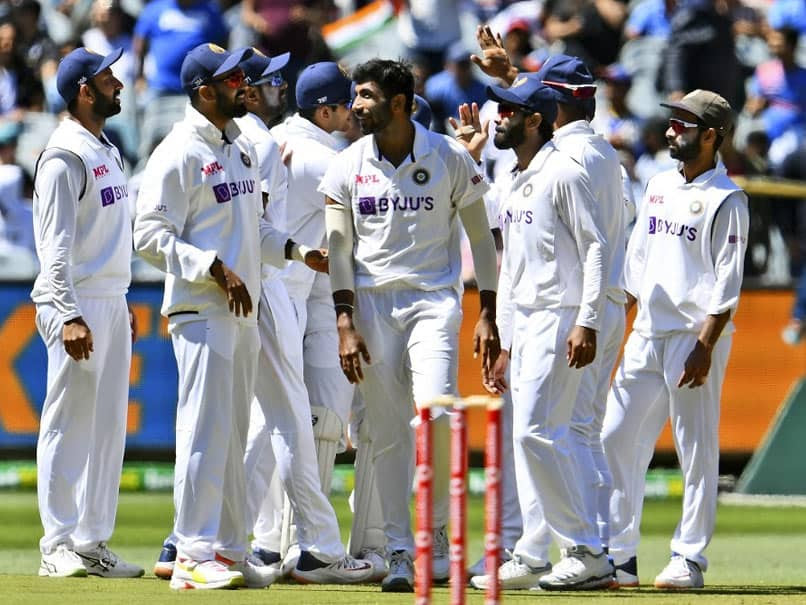
The first two tests of the series reminds us of the Charles Dickens’ classic, A Tale of Two Cities. While India was sent ignominiously to the doghouse by the Aussies in the first test at Adelaide – with a slap on the faces for recording their lowest test innings total of 36 runs in their 90-year cricketing history – the second test at Melbourne saw one of the most striking counterpunches in the game of cricket ever when India clinched a magnificent turnaround victory to level the series.

Ten reasons why the cookies crumbled the way it did in the first two tests of the series.

1. The pink-ball is lethal when it comes to how much it swings, and the Aussies have won all the 8 pink ball tests ever played by them. India started the first test as a clear underdog.

2. The Aussies are sporting the best bowling attack in more than a decade, with Starc, Cummins, Hazlewood, and Lyon at the peak of their abilities. They together rattled the Indian batsmen on Day 3 morning and made them fold up cheaply. Every ball that came close to the edge ended up kissing the edge before flying to the slips!

3. India had a surfeit of T20s and ODIs, particularly after the IPL season, and the overhang of these was carried by them into the first test.

4. The Indian batsman Pujara who is the core backbone, failed to fire, and the rather inexperienced openers didn’t help the cause either. To make matters worse, the middle order in Vihari and Saha was rather fragile and the Indian tail doesn’t wag as much as it does for the Aussies.

5. Despite his staggering numbers in the IPL, and him being named the vice-captain of the limited overs format, KL Rahul was not selected to play the tests. Inexplicable!

So, how did the historic turnaround in the second test come about?

6. The serene yet astute leadership of the stand-in captain Rahane shone through, in a total anti-thesis to the aggressive demeanour of Kohli who returned to India for a personal commitment. Rahane was able to inspire the team to rise!

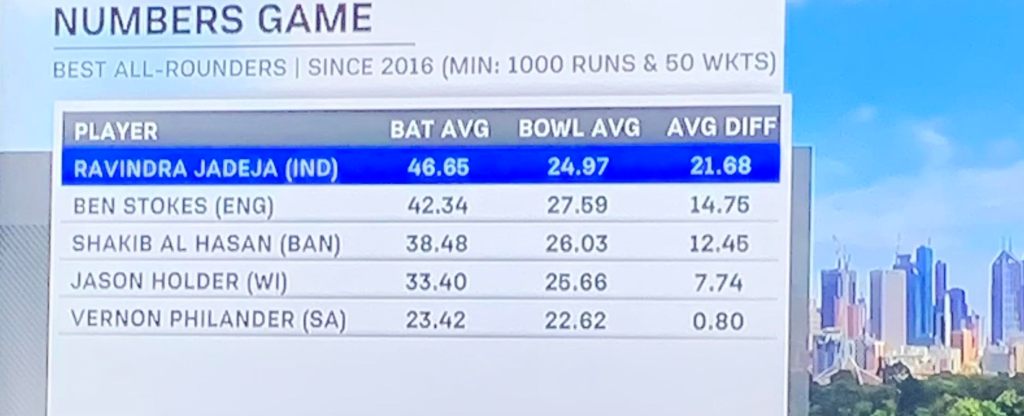
7. The selections were more thoughtful, in bringing Jadeja as a complete all-rounder, along with Pant to replace the lacklustre Saha.

8. The two debutants in Gill and Siraj came good in the big league, and seemed to belong to the international level. Both contributed in back-to-back innings with the bat and the ball, respectively.

9. The batsmen found a way to cobble together a series of partnerships, particularly playing around the centurion Rahane. In fact, Jadeja was particularly impressive in applying himself to stretch the lead in the first innings. In him, India has a complete all-rounder.

10. The Aussie batting has looked fragile, particularly as the big gun Steve Smith hasn’t yet come good. Their openers have missed the consistency Aussies would otherwise get in Warner, and the middle order remains fragile. The Indians were able to exploit this well.

Over to the final two tests of this exciting series to see which way the pendulum swings.

Blog 6 – England vs. West Indies: “Bubble Cricket” Series (July 2020)

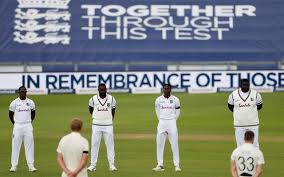
West Indies were touring England through the month of July 2020, the first time international cricket was being played since the COVID-19 lockdowns began earlier in the year in March. It was called “bubble cricket” given the safety “bubble” all the players and public were expected to adhere to. 

It was an evenly poised series till the middle of the second test, but then the gap opened up. While West Indies drew first blood by thrashing England in the first test, England turned the tables to run away with the series 2-1!


This is the way the cookie crumbled where West Indies lost their way towards the latter part of the series. Well, here are many interesting aspects of the series:

  1. As per the new post-COVID-19 rules, no saliva can he applied on the ball to give it shine, and no handshakes were allowed. Interestingly, Sibley accidentally used saliva for shining the ball and he was reprimanded. 
  2. This test series had home umpires instead of the usual neutral umpires due to minimal travel permitted post the Coronavirus outbreak. Yet, the DRS did not overthrow too many decisions by the on-field umpires. 
  3. This was the first time England won a test series after losing the first match. Clearly, the momentum saw a clear shift away from the West Indies somewhere in the middle of the series.
  4. Stuart Broad missed his first home test since 2012 as he was not selected for the first test match of this series. He had played 51 home tests on the trot since 2012. But he made a roaring comeback in the latter two tests. He also scored the third fastest fifty for an English batsman in a test match, getting to the feat in 33 balls. 
  5. Jofra Archer was dropped for the second test as he had violated England’s bio-secure protocols or the “bubble”, but he was allowed to make his way back into the team in the third test. 
  6. Kemar Roach was wicketless for 500 balls before the second test, but finally broke his dry cell and found his way back amidst the wickets. He also reached the milestone of 200 test wickets.


  7. Roston Chase became the first West Indian spinner to take a 5-wicket haul in England. Imagine he went ahead of so many earlier West Indian spinner legends such as Sir Gary Sobers and Lance Gibbs! 
  8. Alzarri Joseph took only 3 wickets in the series but he did come in handy with the bat in the second test as a night watchman scoring 32 runs. Alas, that didn’t prove enough and West Indies lost the close second test, and then kept on going downhill!
  9. John Campbell scored 84 runs in 6 innings at an average of 14. Not good enough for an opener. Also, Shane Dowrich was utterly lacklustre and should be replaced with Shai Hope as the wicketkeeper and another batsman should be added to the team.
  10. Ben Stokes once again stamped his all-rounder authority by delivering a great performance. He amassed 363 runs in 5 innings at an average of 91 and topped it up with bagging 9 wickets in 4 innings. He couldn’t bowl in the final test due to his shoulder niggle. 


  11. Stuart Broad reached 500 test wickets in the third test, he is only the 7th bowler in the world to do so. He also was the “man of the series” as he took 16 wickets in just 4 innings and turned the tide in England’s favour. 

India vs. New Zealand Tri-Format Cricket Series (January – February, 2020)

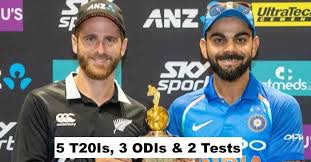
India were touring New Zealand after four years and the results couldn’t have been more one-sided! While India drew first-blood by thrashing New Zealand 5-0 in the T20 games (yes, 5-0!), it was India that was on the receiving end as New Zealand turned the tables decisively by double-whitewashing India 3-0 in the one-day internationals (ODIs) and 2-0 in the test matches!

Why did the cookie crumble in such a one-sided manner in each of the three formats, with the Black Caps redeeming themselves and how! Well, here are the ten reasons why:

  1. Two of the five T20s India won were through a super over, after the twenty overs threw up a tied score. These could have gone either way, but India just found a way to hold their nerves twice
  2. India had no past baggage of underperformance to carry as the bilateral T20 series was getting played for the first time
  3. The past blues from the ODIs and Tests on the lively New Zealand wickets came back to haunt the Indians in the other two formats
  4. Indian bowling went off the boil as the series progressed. Jasprit Bumrah, mainstay weapon of the Indian bowling attack surprisingly struggled to find his length. He finished the one-day series wicketless! Shardul Thakur got a great break to make an impression but did disappoint, giving more than 200 runs in the three ODIs.
  5. Indian opening batsmen failed to impress in a string of low opening stands. Mayank Agarwal failed to replicate his warm-up game performance again (scoring a mere 36 runs in 3 innings)
  6. The backbone of Indian batting lineup, Cheteshwar Pujara, also drew flak for his approach in the first Test, where his 11 off 81 balls put enormous pressure on the other batsmen. Pujara and Mayank Aggarwal were the only two players who managed to reach a total of 100 runs over the four innings
  7. India’s batting powerhouse and talismanic skipper Viral Kohli managed to score 218 runs in 11 innings at an average below 20. The run machine has not scored a hundred in his last 22 international innings across formats
  8. Rishabh Pant once again failed to capitalize on the opportunity that the selectors keep offering him. He contributed 60 runs in 4 innings at an average of 15. With him behind the wickets, he is regularly compared with the legend – “MS Dhoni”. He really needs to get his game plan, mental attitude and discipline together to achieve the consistency that the international platform demands
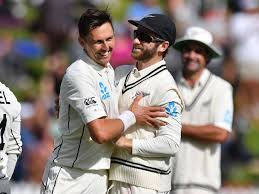
  9. The New Zealand bowling attack, led by Trent Boult and Tim Southee, found their mojo in the ODIs and Tests. The debutant allrounder Kyle Jamieson seemed like a great find as he impressed in both the bowling and batting departments.
  10. Tom Latham proved that he is an astute and determined captain who can hold his own while the maestro Williamson was injured

So that’s how the cookie crumbled for India. They got their first shock in the ongoing world test series championship, after a string of series wins on their home grounds.