

Cricket, known for its rich tradition and history, witnessed a revolutionary shift in the early 21st century with the emergence of T20 cricket. This shorter format of the game has taken the cricketing world by storm, captivating fans across the globe and adding another dimension to the experience of the sport.
The history of this format can be traced back to the UK: in 2003, the England and Wales Cricket Board needed a one-day match to replace the now-defunct Benson & Hedges Cup, and authorities were eager to invigorate domestic cricket and draw larger crowds to matches, especially youth. The Twenty20 Cup, as it was called, consisted of fast-paced, 20-over-per-side games designed to fit into a single evening. This new format was an instant success, attracting fans of all ages and backgrounds, including those who had never previously shown an interest in cricket.
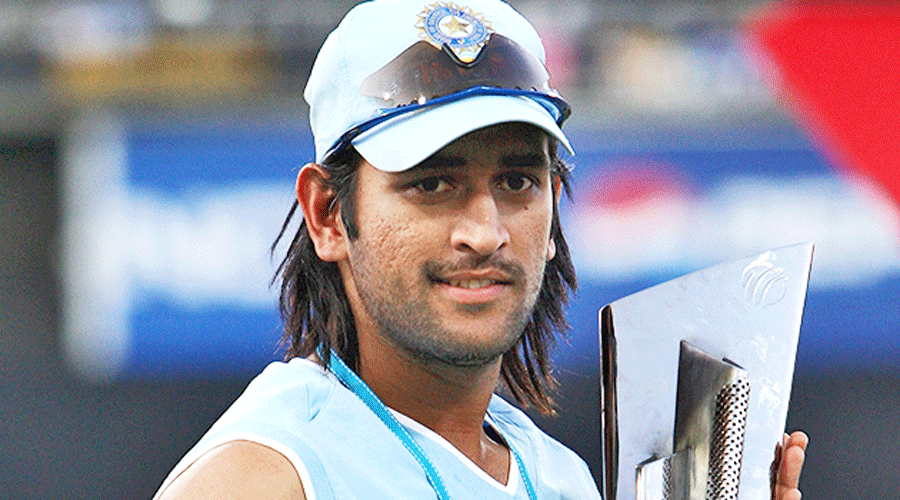
Soon enough, it spread worldwide, with several tournaments in Australia in particular, and in 2007 the inaugural Twenty20 International cricket world championship was held in South Africa. India lifted this inaugural T20 world cup trophy with MS Dhoni as its new captain, that set the stage for the launch of the Indian Premier League (IPL) the very next year.
There have been a multitude of tournaments since then, with the Indian Premier League serving as the largest, and for many, this is the only format in which they consume the sport.
It’s also changed the experience for players: the limited number of overs forces batsmen to go on the offensive from the very start, resulting in high-scoring and entertaining contests. For instance, it’s very common to see teams score 8 or 9 runs in an over – which would be the upper limit in an ODI, where saving wickets is a larger priority and risks less valuable! The introduction of the powerplay, where only a limited number of fielders are allowed outside the 30-yard circle in the first six overs, is another big change.
Despite the overwhelming success and popularity of T20 cricket, it is not without its critics, particularly among cricket purists. Traditionalists argue that T20 cricket, with its emphasis on big hits and quick results, undermines the essence of the sport. They contend that it reduces the art of batting and bowling to a mere spectacle, favoring power-hitting over technique and strategy. They’re also worried about the potential diminishing interest in Test cricket, the longest format of the game, which is known for its strategic depth and the mental and physical endurance it requires.
The emergence of T20 cricket is undoubtedly an interesting development in the sport, whether one is a believer or a naysayer. It raises questions about the direction of the sport and what constitutes its essence. Is it important to maintain tradition or embrace innovation? How does one bring life back into a sport? Regardless of these larger philosophical questions, it remains true that 20-over matches aren’t going anywhere, and they will continue to have their own fanbase.
Sources:

 10 Reasons Why the Cookie Crumbled the Way It Did